The timeline
Federal guidance (EPA and FEMA) puts it plainly: mold can begin growing on wet building materials within 24 to 48 hours. That is not the point where you see it. It is the point where spores that are always in the air find wet drywall paper, carpet pad or particleboard and start to colonize. Visible growth and the smell come days later, and by then the material is usually past saving.
So the first two days decide how big the job becomes. Everything below is about using them well.
The first 48 hours
- Photograph everything before you move it. Standing water, the water line on the walls, wet contents. Your insurer will ask.
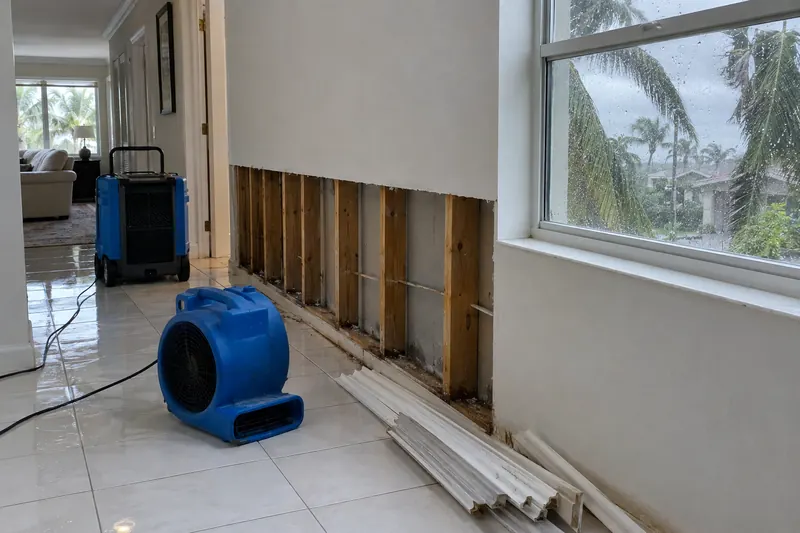
- Get the water out and the air moving. Pump or mop standing water. Open the house if the outside air is drier than the inside, which after a storm it often is not; in that case keep it closed and run the A/C and every fan you own.
- Pull wet carpet pad and anything made of particleboard. Pad and particleboard hold water like a sponge and do not dry. Carpet itself can sometimes be saved; the pad under it cannot.
- Open the wet walls. Baseboards off, and drywall cut out above the water line. Industry practice (IICRC S500) is to remove drywall to at least 12 inches above the highest point the water reached, because the paper wicks higher than it looks. Floodwater from outside is treated as contaminated, and porous materials it touched come out rather than get dried.
- Dehumidify, not just fans. Fans move moisture off a surface and into the air. In South Florida that air is already near saturation. A dehumidifier takes the water out of the building; fans only work alongside one.
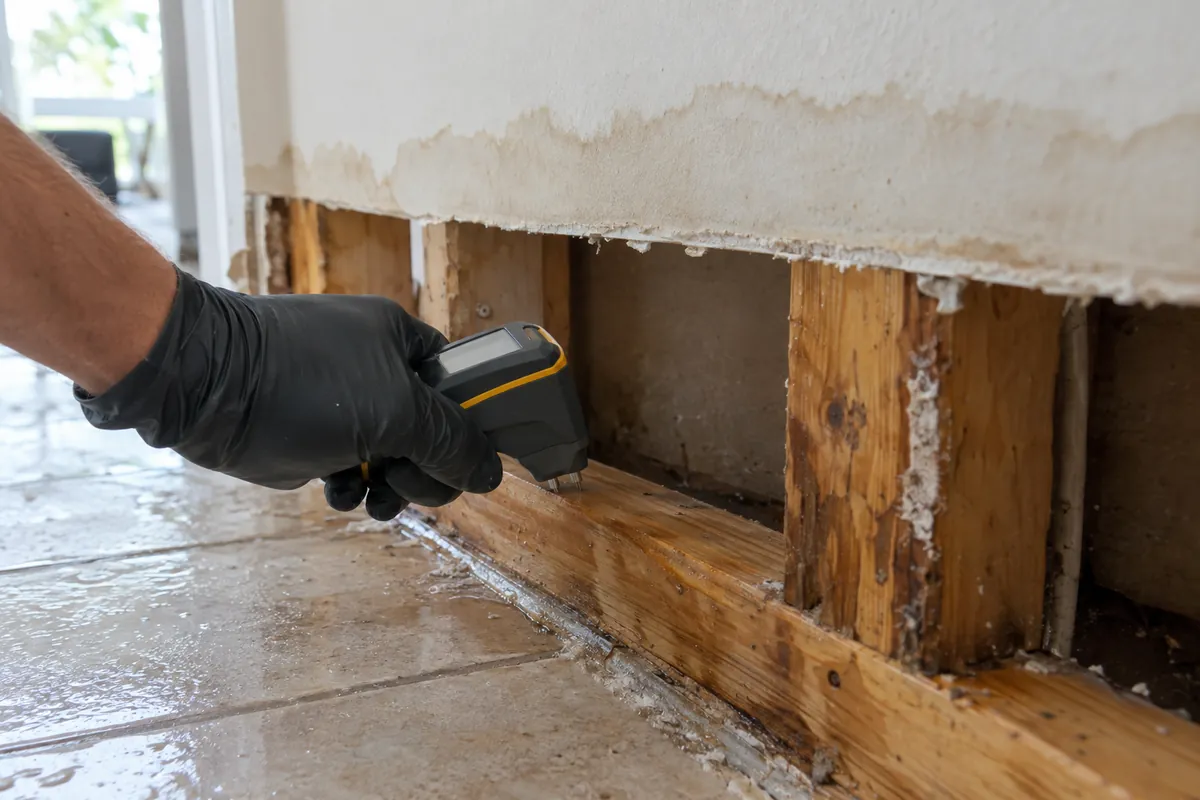
- Measure, don't guess. Materials that feel dry on the surface are often still wet an inch in. A pin moisture meter on the framing and the remaining drywall is how you know drying is done.
When to bring in an independent assessor
An assessment after a water event does two things. It finds the moisture a visual check misses (behind cabinets, inside closets on exterior walls, under tile) with a meter and a thermal camera, and it documents the mold condition with lab samples before anything is rebuilt. That report is what an insurance adjuster, a remediation contractor and a buyer's inspector later will all accept, because an accredited lab produced the numbers.
Florida separates the two roles by law: the licensed assessor who tests a property cannot be the one who remediates it. That is what makes the report independent, and it is why a remediation estimate should come from a report, not instead of one.
Timing: ideally within the first week, once the water is out but before walls are closed. If a contractor has already started demolition, we can still test the open framing and the air, and we can run the clearance test when they are done.
Three mistakes we see after every storm
- Closing the walls too early. New drywall over framing that is still wet is a remediation job six months from now.
- Bleach on drywall. Bleach is mostly water; on porous material it wets the paper and feeds the problem it is meant to kill. Wet material gets removed, not sprayed.
- Trusting "it looks dry." Particleboard cabinets, the bottom plate of a wall, and the back of baseboards stay wet long after the surface dries.
After a storm the phones are busy and the first appointment matters. Call 561-303-0130 (Palm Beach), 954-388-0218 (Broward) or 305-882-9490 (Miami-Dade) and tell us the water is already out; those jobs go first.