The return should draw from the house
A garage air handler belongs outside the living space, but its return air should come from inside the house through a properly enclosed path. When that path has gaps, the equipment can pull warm, humid garage air into the system whenever the blower runs.
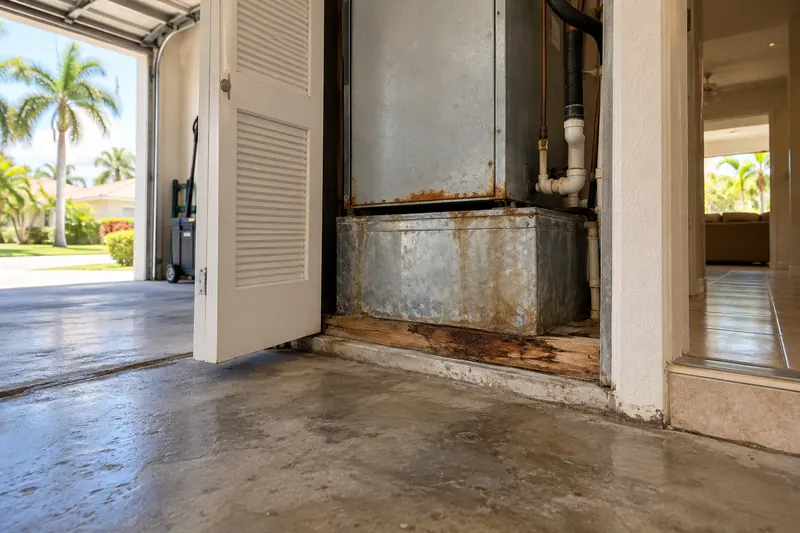
We often see these openings where the return box meets the platform, around a filter rack or at a disconnected duct connection. A platform built from wood and drywall may look finished from the front while remaining open along the back. A closet door does not make that return airtight.
The return side operates under suction. Air enters through available openings, including ones hidden beneath the cabinet. That makes a small-looking gap worth investigating. The concern is not simply that the garage feels humid. It is that the system may be drawing that humidity into an air path intended for conditioned indoor air.
Rust and a wet platform are clues
Rust along the lower cabinet, softened platform edges and dark staining near the filter opening are common findings. Paint may blister where moisture repeatedly collects. A musty odor may be noticeable at the indoor return grille even though the equipment sits in the garage.
These clues do not establish a single cause. Humid air contacting cold surfaces can produce condensation, but a drain backup, a leaking pan or damaged insulation can also wet the cabinet and platform. Sealing a return opening will not correct a separate drainage problem.
During an inspection, we look at how the staining lines up with the equipment and air path. Moisture beneath a drain connection suggests a different investigation from dampness spread across the underside of a cold cabinet. Materials can also look dry after the system shuts off, even when they become wet during operation.
- At the cabinet: Look for corrosion, condensation and deteriorated insulation.
- At the platform: Check for swelling, staining and gaps around the return enclosure.
- At the filter: Look for an uneven fit or a slot that lets air bypass the filter.
- At the drain: Have an A/C contractor evaluate leakage, drainage and pan condition.
Do not remove equipment panels or reach into a running unit. A homeowner can document visible conditions while leaving internal inspection to the appropriate professional.
What a return swab can actually tell us
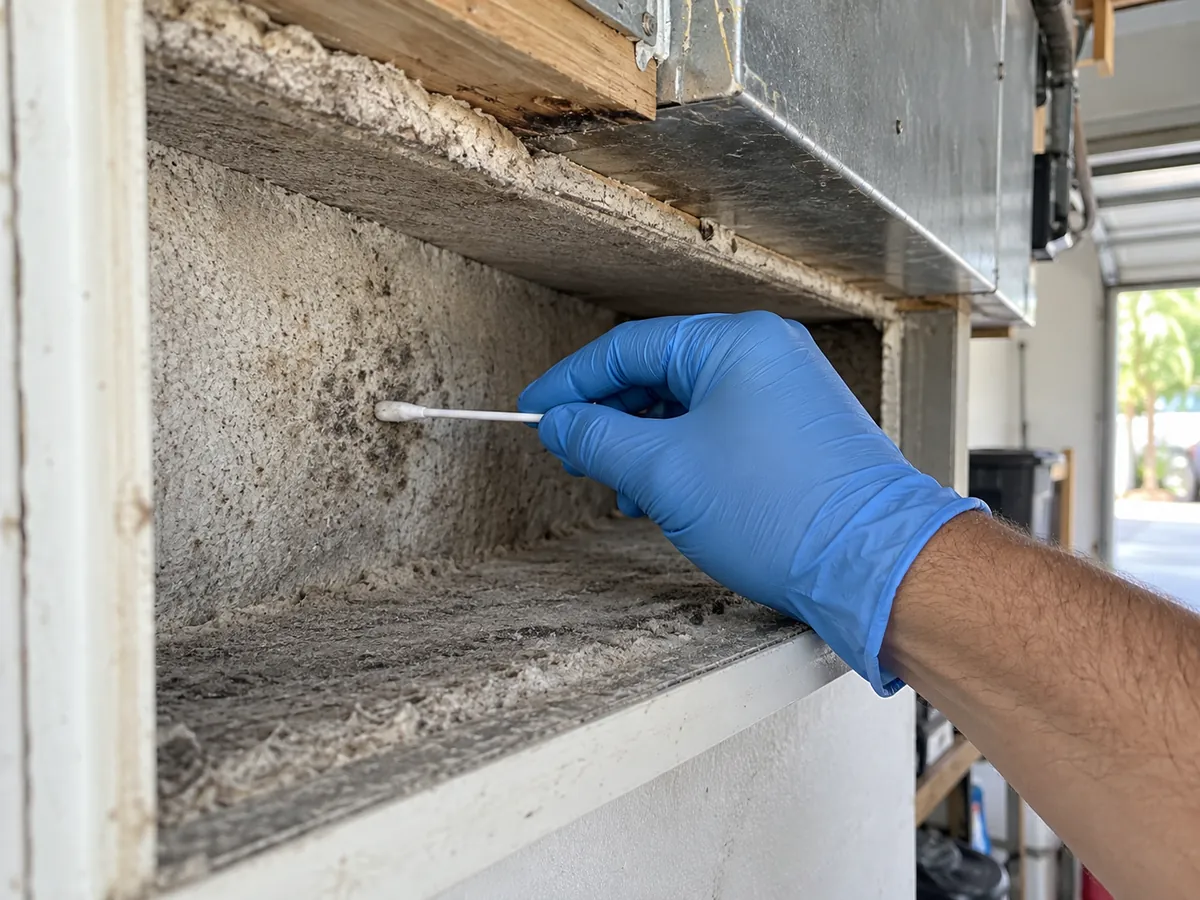
A return surface collects dust carried by moving air. When we swab a suspect patch, laboratory examination may identify fungal structures in the collected material. Depending on the sample and analysis, the report may describe spores, growth structures or other debris.
There is no single mold result that every garage return usually produces. The material sampled, the moisture history and the laboratory method affect what is reported. A dusty return can hold deposited spores without proving that the whole return enclosure supports active growth. Growth structures associated with a discolored, damp material can support a different interpretation.
That is why we record the sampling location and condition of the surface. A swab from a cabinet edge answers a narrow question about that spot. It does not describe every duct, establish the source of an odor or measure what is present throughout the home.
Sampling is useful when it resolves a specific uncertainty and helps guide the scope of work. It should accompany an examination of moisture and return construction, not replace it. Our inspection process treats the sample as part of a building diagnostic.
Sealing means rebuilding a continuous air path
The goal is a continuous, durable return enclosure between the indoor grille and the air handler. An A/C contractor should trace that entire route, including concealed platform cavities where accessible. Patching the visible front seam can leave the actual garage connection untouched.
Depending on the construction, the repair may involve reconnecting ductwork, rebuilding a deteriorated return box, correcting the filter rack or sealing joints with materials approved for that application. Loose tape over dusty, wet surfaces is not a dependable repair. Neither is covering damaged material without determining whether it needs removal.
The contractor should also evaluate insulation and its exterior vapor barrier. A sealed return can still develop condensation if cold surfaces remain exposed to humid garage air. Sealing, insulation and drainage are related checks, but each addresses a different route by which moisture can cause trouble.
Keep equipment service panels, required clearances and drainage access usable. Do not block an opening simply because it looks like a leak; some openings serve other equipment or building requirements. The contractor needs to distinguish those from unintended openings into the return.
Handle damaged materials separately from the air leak
A repaired air path does not make a softened platform sound again. Wet or suspect materials need their own assessment. The condition of the material and the extent of affected areas help determine whether cleaning, removal or reconstruction is appropriate.
If remediation is needed, the work may involve containment, HEPA air scrubbers and controlled removal of affected materials. The specific approach should follow the assessed conditions. Spraying a surface or painting over staining does not correct an open return, a wet substrate or deteriorated insulation.
Florida requires separation between assessment and remediation: a licensed mold assessor cannot remediate a property they assessed. We document findings and, when warranted, define the remediation scope. A separate remediator performs that work. Our remediation information explains how those roles fit together.
Verify the repair while the system runs
After repairs, ask the A/C contractor to verify the return enclosure under operating conditions. Check that the filter fits, service panels close correctly and repaired joints remain intact. Drainage and condensation should also be evaluated while the system is cooling.
Keep indoor relative humidity under 60%. If humidity remains elevated after the return is sealed, have the contractor investigate further rather than assuming the garage opening was the only issue. Persistent odors, renewed dampness or spreading corrosion also deserve follow-up.
For a damp or musty garage A/C closet, request an inspection or call Palm Beach at 561-303-0130.