The condo above is a starting point, not a conclusion
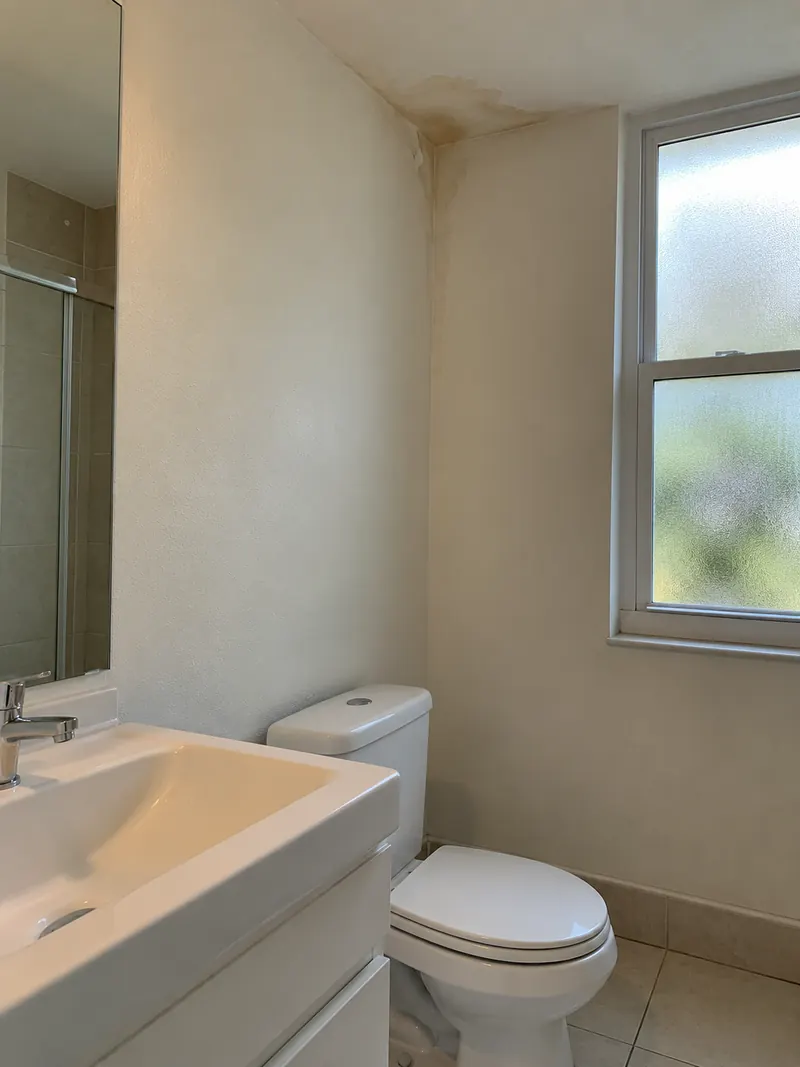
Water entering your condo from above does not automatically mean the upstairs owner caused it. A leaking appliance, a plumbing connection serving that unit, or a shared drain stack can leave damage in the same general area. The visible wet spot tells us where water reached the finish, not necessarily where it escaped.
On inspections, we often see moisture spread along the ceiling-to-wall junction or collect around a pipe penetration. Water can travel across a slab or along building materials before appearing below. A wet bathroom ceiling does not, by itself, establish that the upstairs shower is leaking.
The useful question is not simply, Whose unit is above this? It is, Which component released the water, and what evidence connects it to the damage? Start there before assigning responsibility. Our article on what a ceiling stain can mean covers the visible clues; a condo investigation also needs access and coordination beyond the stained room.
Document the conditions before the evidence changes
Notify building management promptly and report an active leak through the association's emergency process. Move belongings away if you can do so safely. Stay clear of sagging ceilings and water near electrical fixtures. Do not enter another unit or open a shared wall yourself.
Photograph the room before cleanup changes its appearance. Include a wide view showing the location, then closer views of the wet edges, peeling paint, baseboards, and affected belongings. Keep the original files and record when you noticed the problem.
- Describe whether water was dripping, spreading, or already dry when discovered.
- Note whether it appeared during rain or coincided with reported plumbing use upstairs, without treating that timing as proof.
- Save written notices, maintenance responses, and access requests.
- Request copies of plumbing findings, repair descriptions, and drying records.
Do not delay stopping the leak or starting appropriate drying just to preserve a stain. Photographs and written observations can preserve evidence while the response proceeds.
Find out what is inside the shared wall
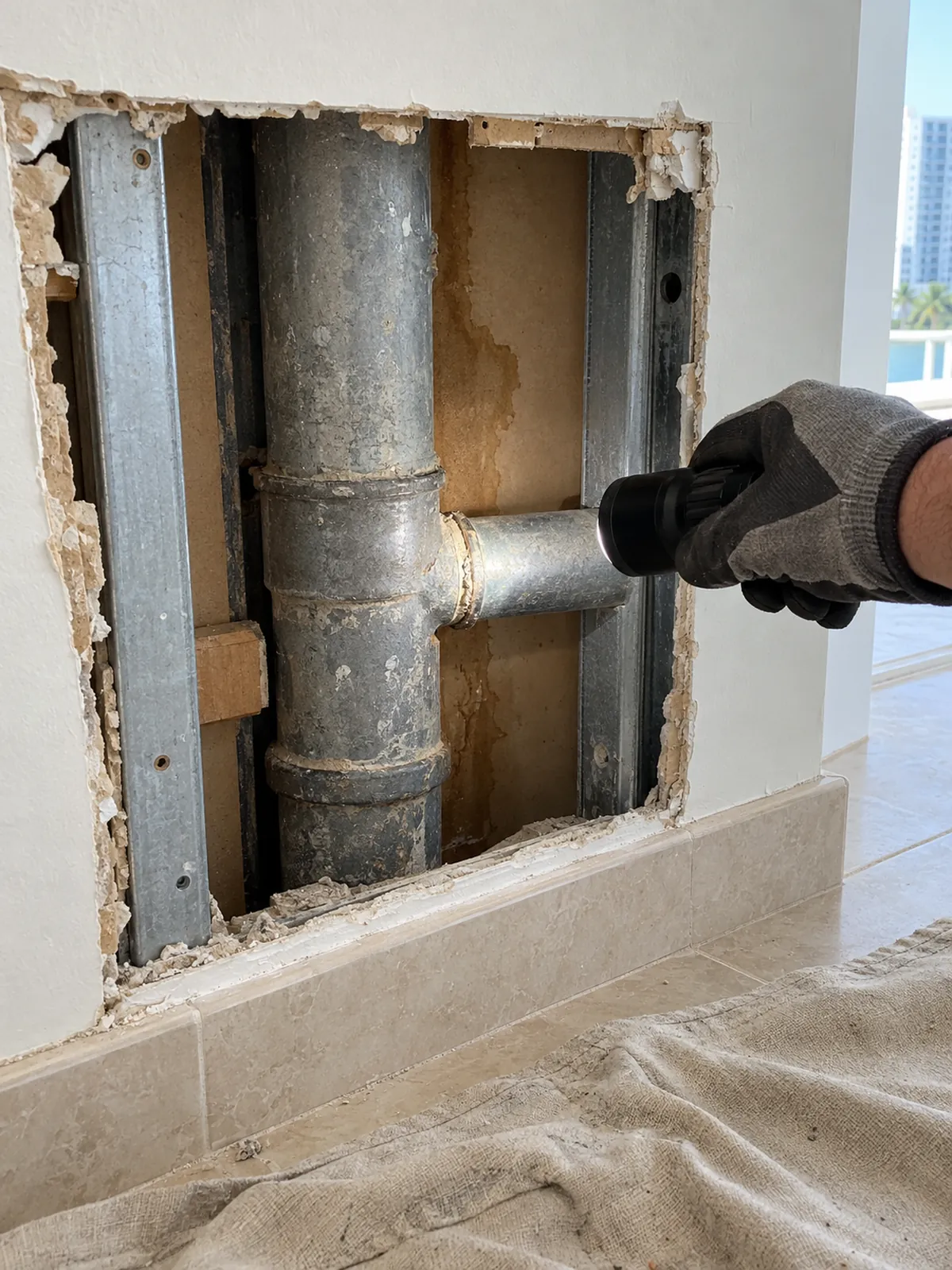
A finished condo wall can conceal a service chase rather than a simple empty cavity. Depending on the building, that space may contain shared drain and vent piping, supply lines, insulation, framing, and electrical services. Pipes serving individual fixtures may connect to shared plumbing inside it.
A drain stack carries wastewater down through the building. A leak at a concealed connection can wet materials outside the upstairs owner's visible living space. Access from your condo may reveal the damage without revealing the actual failed connection.
During an assessment, we compare accessible moisture readings, inspect material conditions, and look for a pattern that supports further investigation. A thermal image can help locate a temperature difference, but it does not independently prove that a pipe is leaking. Moisture findings need confirmation and context.
Any investigative opening should be coordinated with management and the appropriate contractor. Shared assemblies may include fire-resistance features that must be preserved and properly restored. An opening should answer a specific question, not become unplanned demolition.
A useful report separates findings from assumptions
An assessment report should explain what was observed, where it was observed, and what could not be inspected. That distinction matters when another owner or the association needs to authorize access or arrange work.
Confirmed damage and a confirmed source are different findings. We may document wet drywall and visible mold inside an accessible cavity while the source remains unconfirmed. If the upstairs unit or plumbing chase was inaccessible, the report should say so. It should not turn a suspected source into a certainty.
A useful record connects photographs and moisture observations to identifiable locations within the affected unit. It describes the materials involved, the accessible extent of damage, and the next investigative steps. If sampling is appropriate, the report should explain its purpose and limitations. A sample alone cannot identify which owner caused a leak.
The report gives management, contractors, and other involved parties a common description of the building conditions. It is not a guarantee of reimbursement or a decision about legal responsibility. Findings about the water path support that discussion; they do not replace the condominium documents or a coverage review.
Coordinate the repair without waiting on every dispute
Ask management to coordinate access to the suspected source and obtain a written description of what the plumber found. A note saying the leak was fixed is less useful than a description identifying the failed component, its location, the repair, and how the repair was checked.
Keep the source repair, drying, mold remediation, and finish restoration distinct in the records. Fixing a pipe does not establish that the surrounding cavity is dry. Replacing stained drywall does not establish that the source was corrected.
Ask the association to identify the condominium declaration provisions it is using to address maintenance responsibility. Do not assume that a pipe behind your wall belongs to you, or that every leak from above belongs to the association. If responsibility remains disputed, obtain advice specific to the documents and circumstances while coordinating necessary protective work.
For a rented condo, keep the owner and management informed together. For a purchase, ask for the underlying repair and drying records rather than relying on fresh paint or a verbal assurance.
Close the wall after the conditions are addressed
Before finish restoration, the affected area needs more than a dry-looking surface. Accessible materials should be checked, concealed concerns addressed, and the source repair verified by the appropriate contractor. Record any areas that remain inaccessible instead of treating them as cleared.
Where mold remediation is needed, the assessment can define the affected materials and recommended scope. The remediation contractor handles the work, including containment and appropriate equipment. Florida requires separation between assessment and remediation on the same property: we do not remediate a property we assess. Read about the process on our mold remediation page.
Keep the assessment, source-repair documentation, drying records, and any follow-up findings together. That file helps explain what happened and what was done if the stain returns, management changes, or the condo is later offered for sale.
For a condo leak in Palm Beach County, request an inspection or call 561-303-0130.