

The stain is a clue, not a diagnosis
A brown ring on a ceiling can look much the same whether the water came through the roof, escaped from an attic A/C drain, or leaked from an upstairs bathroom. The visible mark tells us that moisture reached the ceiling finish. It does not identify the source or prove the material is still wet.
Water can travel along framing, pipes, or the back of drywall before becoming visible. The stain may appear away from the opening that let water in. That is why repairing something directly above the mark, without checking the surrounding area, can leave the actual leak untouched.
On inspections, we compare the stain with the layout above it and ask when it changes. Rain, air-conditioning use, and bathroom use each offer clues. The useful question is not just what the stain looks like, but what was happening when it appeared.
If the ceiling is bulging, sagging, or shedding material, keep people clear of the area. Do not press it, puncture it, or place a ladder underneath it. Water near a light fixture also needs prompt professional attention; do not handle the fixture or wet electrical components.
When the roof is the likely source
A stain beneath the roof deserves attention after rain, especially when it darkens or spreads during storms. We often see marks near exterior walls, around ceiling penetrations, or beneath areas where roof surfaces meet. Wind-driven rain can make a leak appear only under certain weather conditions.
The shape may be irregular, with a darker edge where water evaporated and left residue. Repeated wetting can leave overlapping rings. Those rings suggest a history of moisture, but their appearance cannot tell us exactly when the leak occurred or whether a roof repair worked.
Where access is safe, the attic can provide better evidence than the painted ceiling. Wet insulation, staining on framing, or moisture on the underside of roof decking can help trace the route. A dry attic during clear weather does not rule out a leak that happens during rain.
- Note whether the stain changes after rain and whether wind seems to matter.
- Photograph its edges before anyone cleans or paints the surface.
- Have a qualified roofer investigate the suspected entry point and repair the roof.
After the roof repair, the ceiling and concealed materials still need checking. Stopping rain entry and drying the affected assembly are separate parts of resolving the damage.
When attic A/C drainage is involved
A ceiling stain that changes during dry weather may point toward the air-conditioning system. In South Florida, cooling removes moisture from indoor air. That water collects at the equipment and should drain away through the condensate system.
If the air handler or its drain piping is in the attic, a drainage problem can wet the ceiling below. Possible findings include a blocked condensate line, a leaking connection, or water in an auxiliary drain pan. Missing or damaged insulation around cold components can also allow condensation to drip.
Location helps narrow the search. A stain beneath the air handler, a drain route, or nearby ductwork makes the cooling system worth checking. It is not proof: roof water can reach those same areas, and attic water can travel before dripping onto drywall.
We look for a connection between the moisture pattern and the equipment above it. An HVAC professional should evaluate drainage, the pan, and any overflow protection. Clearing a drain without checking where the escaped water went can leave wet insulation or ceiling material in place.
Do not climb into an unfamiliar attic to follow a drip. Access can be restricted, and ceiling drywall is not a walking surface. Describe the stain's location and timing so the technician can investigate safely.
When an upstairs bathroom is above the mark
In a home or condo with a bathroom overhead, the plumbing and shower assembly belong on the list of possible sources. A supply connection, drain, toilet connection, or shower leak can all send water into the space above a ceiling.
Timing is useful here. A mark that changes after a shower suggests a different investigation from a ceiling that stays wet while the bathroom is unused. Water associated with draining a fixture may point toward its waste connection. These are working clues, not a diagnosis from the room below.
The stain may sit near a pipe penetration or follow a drywall seam. It may also appear away from the bathroom because framing carries water sideways. The visible location should guide the investigation without limiting it.
A plumber or other appropriate professional may need to check fixtures separately and inspect concealed connections. Avoid repeatedly running a suspected leaking fixture just to see whether the stain grows. For problems involving the shower assembly itself, our article on a shower leaking behind tile explains that investigation in more detail.
In a condo, notify building management when the suspected source is in another unit or a shared building area. Keep photographs and a simple record of when the ceiling changes.
What a moisture reading can tell us
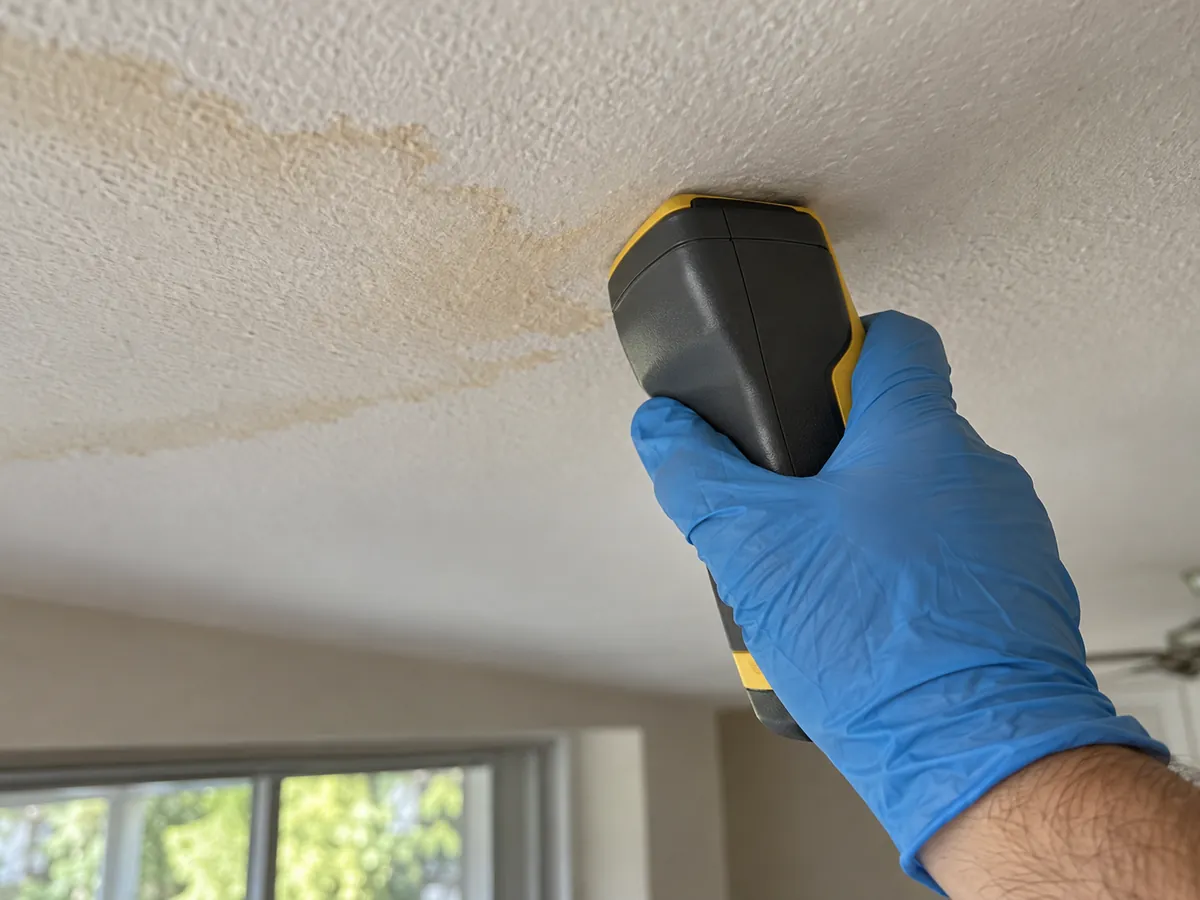
A moisture meter helps distinguish a stained surface from material that may still be damp. We check the affected area and compare it with nearby material that appears unaffected. Mapping those differences can show whether the moisture extends beyond the visible ring.
A moisture reading does not identify the leak by itself. Metal, material differences, and concealed construction can affect readings. We interpret the meter alongside the stain, accessible conditions above it, and the history of rain or fixture use.
A dry reading is useful, but it does not erase evidence of an intermittent leak. Likewise, a damp reading does not establish that mold is present. A mold inspection is a building diagnostic that considers moisture conditions, visible findings, and whether further investigation is needed.
Why painting over it changes nothing
Paint can hide discoloration. It cannot repair a roof opening, restore A/C drainage, seal a plumbing connection, or dry concealed insulation. If water keeps arriving, the stain may return, the finish may blister, or the ceiling material may deteriorate.
The sequence is straightforward: identify the source, repair it, dry the affected area, and determine which materials can remain. Cosmetic work comes after those steps. A ceiling that looks clean after painting is not evidence that the assembly above it is dry.
If mold assessment identifies a need for remediation, that work belongs with a separate qualified remediator. A licensed Florida assessor cannot remediate a property they assessed. The assessment should clarify the findings and scope without confusing those roles.
For help investigating a ceiling stain in Palm Beach County, request an inspection or call 561-303-0130.