
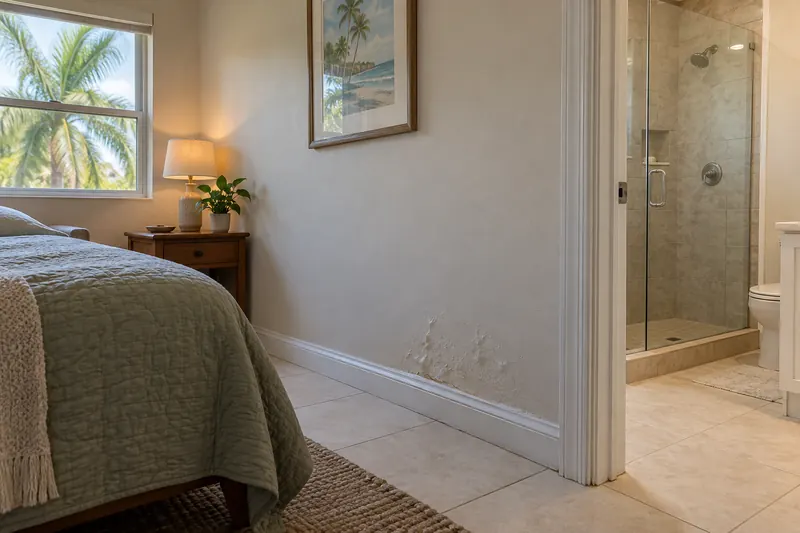
The clue may be outside the bathroom
A bubbling patch of paint in a bedroom can lead us back to the shower on the other side of the wall. The bathroom itself may look clean. The tile may feel solid. Meanwhile, water is reaching drywall or collecting near the bottom of the shared wall.
We often see homeowners repaint the adjoining room before anyone checks the shower. When the stain returns, the problem is not necessarily the paint. The wall may still be getting wet whenever the shower runs.
Look at the bedroom, hallway or closet that shares the shower wall. Move stored items away so the surface is visible, but do not peel back damaged materials.
- Paint that bubbles, wrinkles or lifts near the floor.
- A baseboard that swells, separates from the wall or develops staining.
- Drywall that looks distorted or has a darkened lower edge.
- A localized musty odor inside an adjoining closet.
- A stain that becomes more noticeable after shower use.
These signs justify checking for moisture. They do not, by themselves, establish that mold is present or that the shower is the source.
Grout is not the waterproofing system
Cracked or missing grout gives water an easier route behind the tile. But tile and grout are not a substitute for the waterproofing assembly underneath. A properly built shower needs a continuous system that manages water at the walls, corners, base and plumbing penetrations.
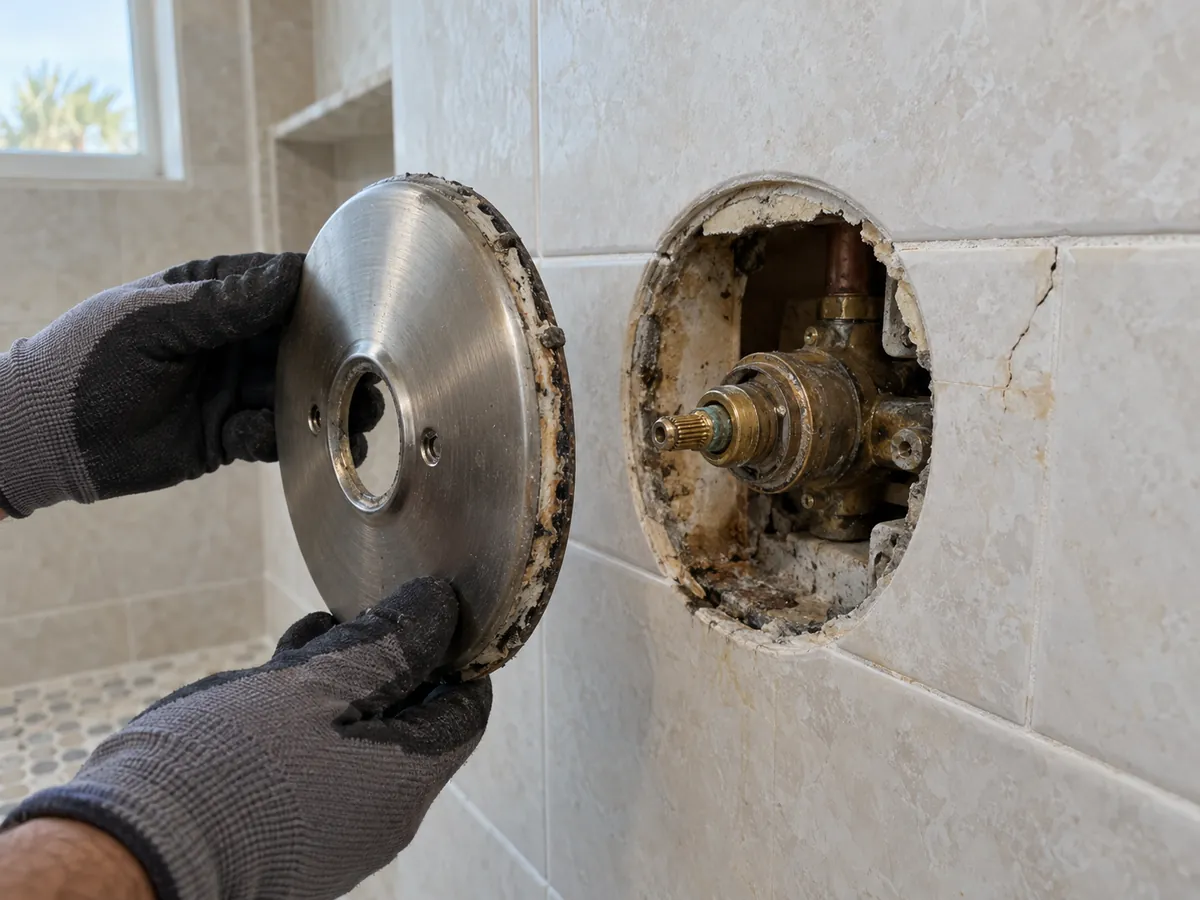
The escutcheon is the trim plate around the shower valve handle. If its gasket, seal or connection to the wall fails, spray can enter around the opening. Water may then wet the backing material or travel into the wall cavity. A leaking valve connection inside the wall can produce similar damage without any visible gap around the trim.
This distinction matters. Regrouting may address deteriorated joints, but it cannot repair missing waterproofing or a concealed plumbing leak. Adding sealant around everything is not a reliable diagnosis either. Some trim assemblies have drainage openings that should remain open.
Ask the repair contractor to identify the actual entry point and check the underlying assembly. If the shower is suspected of causing active wetting, stop using it until the source is evaluated. Continuing to use it can keep feeding moisture into materials that otherwise might dry.
How we investigate without opening the wall
Our mold inspection starts with the layout, visible conditions and history of the stain. We ask whether it follows shower use, whether plumbing work was recently performed and whether the affected wall has been patched before. In a condo, nearby plumbing and adjoining units may also need consideration.
We then map moisture from accessible surfaces. A nonpenetrating moisture meter lets us compare the suspect area with nearby material that appears dry. We follow the pattern along the shared wall rather than treating an isolated reading as the answer.
Infrared imaging can help locate surface temperature differences worth checking. A thermal image does not see through tile and does not identify mold. Air conditioning, metal framing and other conditions can also affect what the camera shows. Suspect areas need confirmation with moisture measurements and the surrounding evidence.
Metal pipes and fasteners can also influence a moisture meter. The tool, wall construction and location of the reading all matter. We document those limitations instead of labeling every elevated response a leak.
Accessible plumbing panels may allow a visual check without demolition. Where appropriate, a qualified plumber can perform controlled testing to separate a supply leak from water entering around the trim or shower assembly. Testing should not mean repeatedly soaking an already damaged wall.
What the findings can and cannot confirm
Matching moisture patterns, visible damage and a response to controlled testing can provide strong evidence that a shower is wetting the adjoining wall. That can be enough to recommend a targeted repair investigation without opening the wall during the initial inspection.
It is not the same as documenting every concealed surface. A nondestructive inspection cannot guarantee that a closed wall contains no mold. It may establish wetting while leaving the condition of the drywall backing, insulation or framing unresolved.
A dry reading also needs context. A shower that has not been used recently may leave an old stain but no measurable wetness at the accessible surface. We record that finding and consider the history rather than declaring the assembly sound.
Air sampling is not a substitute for finding the water entry point, and it cannot pinpoint a failed valve seal. If concealed conditions remain uncertain, the report should explain what further access is needed and who should arrange it. Our article on signs of hidden mold covers broader warning signs beyond shower walls.
What remediation of the wall involves
The source repair and the affected materials need separate attention. Stopping water entry does not remove damaged drywall. Removing drywall without fixing the shower leaves the same wetting path in place.
Where mold remediation is warranted, the written scope should identify affected areas, access requirements and how the work area will be isolated. A qualified remediation contractor may use containment, HEPA air scrubbers, negative air machines and dehumidifiers as appropriate to the work.
Damaged or mold-affected porous materials are removed as specified. Exposed framing is evaluated, cleaned where appropriate and dried. Removal follows the documented extent of damage and conditions found during opening, not simply the edge of the visible paint stain.
Opening the adjoining bedroom wall may provide access, but it does not automatically solve a failed shower assembly. Tile and backing may also need removal if that is necessary to repair the waterproofing properly. The scope may need adjustment when concealed damage becomes visible.
Our remediation information explains the process. Florida law separates assessment from remediation: a licensed assessor cannot remediate a property they assessed. We assess and document the building conditions; an independent remediation contractor performs that work.
Check the repair before closing the wall
Before reconstruction, the leak repair should be checked and the affected materials should meet the project's drying and verification requirements. Fresh paint and a dry-looking surface are not enough. The findings should support closing the wall, with any remaining limitations documented.
For landlords and condo owners, coordinate access and responsibilities early. Keep the assessment, repair details and remediation records together. After reconstruction, watch the adjoining wall and baseboard for returning changes rather than assuming new grout settled the issue.
To investigate a suspected shower leak, request an inspection or call Palm Beach at 561-303-0130.