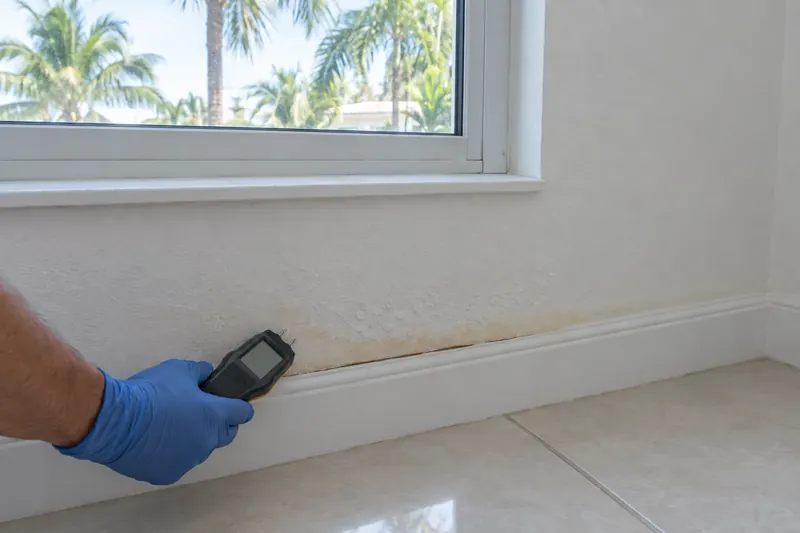
And here's something many homeowners don't realize: a house can look perfectly clean while moisture is quietly creating the conditions for mold growth.
Living in South Florida means dealing with humidity, heavy rain, air conditioning, and the occasional plumbing surprise. Most of these things are manageable. The trouble starts when moisture gets trapped somewhere it doesn't belong.
So how do you know when something isn't right?
Here are seven warning signs worth paying attention to.
1. That Musty Smell That Never Really Goes Away
You know that smell when you walk into an older, damp building? Some people describe it as wet cardboard, an old towel, or a closed-up basement.
If you're noticing that smell in your house, especially in one particular room, don't ignore it.
A musty odor can indicate microbial growth, even when nothing is visible on the walls.
Here's a simple example.
Imagine walking into your guest bedroom and noticing a strange smell. You clean the carpets, wash the bedding, and even replace the air freshener. The smell disappears temporarily but keeps coming back.
The problem might not be anything inside the room itself. Moisture could be trapped behind a baseboard, inside a wall cavity, or underneath the flooring.
What to look for:
- Musty smells that become stronger when the AC turns on.
- Odors concentrated around closets, cabinets, or exterior walls.
- A room that smells damp even though everything appears dry.
Don't assume a pleasant-smelling room means the problem is gone. Air fresheners can mask odors without addressing their source.
2. Paint That's Bubbling, Peeling, or Separating From the Wall
Your walls can tell you quite a bit about what's happening behind them.
Have you ever noticed paint bubbling near a window? Or a baseboard beginning to separate from the wall?
It might seem like a cosmetic problem, but it can also indicate moisture getting into building materials.
Florida homes are particularly vulnerable around windows, exterior walls, roof penetrations, and plumbing fixtures.
Picture a small leak around a window frame. Every time it rains heavily, a little water enters the wall. Not enough to create a puddle, but enough to keep the drywall damp.
Over time, the paint may blister, the drywall may soften, and mold may begin growing on suitable damp materials.
Pay attention to:
- Paint bubbling or peeling without an obvious explanation.
- Brown or yellow discoloration on ceilings.
- Swollen baseboards or door trim.
- Drywall that feels soft or appears warped.
These signs don't automatically mean mold is present. They mean moisture damage deserves investigation.
And moisture is what makes indoor mold growth possible.
3. Your Home Feels Humid Even When the AC Is Running
Let's talk about something Florida homeowners deal with constantly: humidity.
Air conditioners don't just cool your home. When operating properly, they also help remove moisture from indoor air.
But cooling and dehumidification aren't always the same thing.
An oversized air conditioning system, inadequate ventilation, equipment problems, or outside air entering the building can contribute to elevated indoor humidity.
The house might feel cool while the air still feels sticky.
As a practical target, the EPA recommends keeping indoor humidity below 60%, ideally between 30% and 50%.
That doesn't mean mold automatically appears at 61%. It means prolonged elevated humidity makes moisture problems more likely, particularly on cooler surfaces and in poorly ventilated areas.
Warning signs include:
- Condensation forming on AC vents.
- Windows repeatedly fogging on the inside.
- Closets or bathrooms that stay damp.
- Clothing or stored belongings developing a musty smell.
- Indoor humidity readings consistently above 60%.
A basic hygrometer can help you monitor humidity.
Just remember that a humidity reading tells you about the air. It doesn't necessarily reveal moisture hidden inside building materials.
4. Water Stains That Keep Coming Back
One of the biggest mistakes homeowners make is assuming a water stain is harmless because it's dry today.
A previous roof leak, plumbing issue, or AC drain overflow can leave moisture trapped in materials long after the visible water disappears.
Consider a common Florida scenario.
A homeowner notices a small brown stain on the ceiling after a heavy rainstorm. A roofer repairs the leak, and the homeowner paints over the stain.
Problem solved?
Maybe. But what happened to the insulation and drywall that got wet?
Were they properly dried? Was the moisture damage evaluated?
If wet materials remain damp long enough, mold growth becomes a possibility.
It's especially worth investigating water damage involving:
- Roof leaks.
- Plumbing lines inside walls.
- Air conditioning condensate drains.
- Bathroom waterproofing failures.
- Washing machines, refrigerators, and dishwashers.
The important question isn't only whether the leak was repaired.
It's whether the affected materials were dried and whether any damage remains.
5. Strange Spots Around AC Vents or Air Conditioning Equipment
Your air conditioning system is one of the first places worth checking when investigating unusual moisture in a Florida home.
AC systems produce condensation as part of normal operation. That water needs to drain properly.
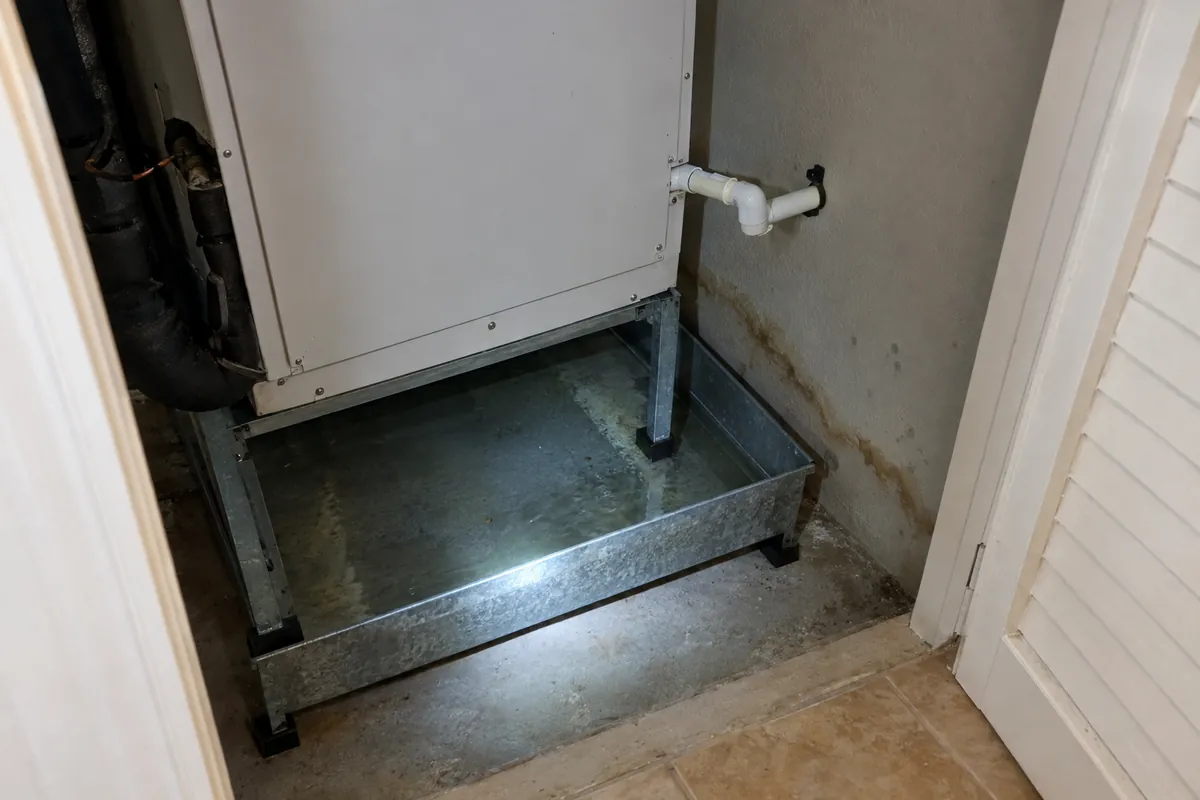
Problems can arise when drain lines clog, drain pans overflow, equipment leaks, or cold surfaces develop condensation.
Homeowners sometimes notice dark discoloration around supply vents and immediately assume it's black mold.
But discoloration around a vent isn't enough to identify mold. Dust accumulation and other staining can look similar.
What matters is understanding why the area is becoming dirty, damp, or discolored.
Check for:
- Repeated condensation around air vents.
- Water collecting near the indoor AC unit.
- Staining on ceilings around supply registers.
- Persistent musty odors associated with the HVAC system.
- Damp insulation or surrounding materials.
If you suspect contamination inside ductwork or air-handling equipment, have the system evaluated by an appropriate professional.
And don't start spraying chemicals into your ducts. That isn't a substitute for finding the moisture problem.
6. Allergy-Like Symptoms That Seem Worse at Home
This one needs a little perspective.
Mold exposure can cause allergic symptoms in some people, including nasal congestion, coughing, wheezing, and eye irritation. Damp indoor environments are also associated with respiratory problems.
But those symptoms alone don't prove your house has mold.
Dust mites, pollen, pet allergens, ventilation issues, and other indoor air pollutants can cause similar complaints.
The pattern is what may justify further investigation.
For example, someone might notice that their allergies feel worse in a particular bedroom or that symptoms improve after spending time away from the house.
That doesn't establish the cause, but it can be useful information when evaluating the indoor environment.
If you're experiencing persistent respiratory symptoms, speak with a healthcare professional.
From a building standpoint, look for supporting evidence such as odors, condensation, water damage, or elevated humidity.
A mold inspection evaluates building conditions. It isn't a medical diagnosis.
7. You've Had a Leak, Flood, or Water Damage You Never Fully Investigated
This might be the most overlooked warning sign of all.
Think back over the last year or two.
Has your water heater leaked? Has your AC overflowed? Did water enter during a tropical storm? Did a bathroom cabinet get wet from a slow plumbing leak?
Sometimes homeowners clean up the visible water and assume everything is fine.
But water can travel farther than expected.
It can move under flooring, into adjacent rooms, behind cabinets, and along the bottom of drywall.
A small leak underneath a kitchen sink, for example, can affect the cabinet base and neighboring materials before anyone notices a problem.
The EPA recommends drying water-damaged materials within approximately 24–48 hours to reduce the likelihood of mold growth.
If you don't know how long the materials stayed wet, or whether they dried completely, it's worth taking a closer look.
The absence of standing water doesn't mean hidden materials are dry.
The Biggest Mistake: Trying to Identify Mold Without Finding the Moisture
Homeowners sometimes focus so heavily on identifying the type of mold that they overlook the actual problem.
Here's the part that matters most: mold growth requires moisture.
You can clean a visible patch, repaint a wall, or replace a piece of baseboard. But if the moisture source is still there, the conditions that caused the problem remain.
A proper moisture investigation may involve visual examination, moisture meters, humidity measurements, and thermal imaging when appropriate.
Thermal cameras can help identify temperature differences that warrant further investigation, but they don't see mold through walls. Neither do moisture meters directly detect mold.
Air or surface sampling may be useful in selected situations when there's a specific question to answer. However, testing is not always necessary, especially when mold is already visible.
The goal should be to understand where moisture is coming from, what materials are affected, and what needs to happen next.
That's the difference between addressing a problem and simply covering up the evidence.
Frequently Asked Questions About Hidden Mold
Can you have mold behind drywall without seeing anything?
Yes. Mold can grow on the back of drywall or other concealed building materials when sufficient moisture is present. A wall may look normal on the finished side even when hidden materials have been affected.
Does a musty smell always mean mold?
No. Musty odors can have different causes, but a persistent earthy or mold-like smell should be investigated, especially when accompanied by moisture damage.
Can thermal imaging detect mold inside a wall?
Not directly. Thermal imaging identifies temperature differences. Some patterns may suggest possible moisture-related issues, which require additional evaluation.
Should I order air testing if I suspect hidden mold?
Not necessarily. The EPA and CDC emphasize investigating visible mold and moisture problems rather than automatically relying on air sampling. A qualified assessor can determine whether sampling would help answer a specific question.
Can mold return after it's cleaned?
Yes. If the original moisture source hasn't been corrected, mold can develop again. Cleaning or removing affected material without resolving the underlying moisture issue may not provide a lasting solution.
Not Sure What's Happening Behind Your Walls?
You don't have to see black spots all over your ceiling to have a reason to investigate.
A recurring odor, unusual condensation, a past plumbing leak, or unexplained water staining can be enough to justify taking a closer look.
And not every suspicious stain turns out to be mold.
That's why identifying the source of moisture and understanding the condition of the building is so valuable.
At Same Day Mold Inspections, we help South Florida homeowners investigate suspected moisture and mold concerns so they can make informed decisions about their homes.
If you've noticed one or more of these warning signs, don't wait for the problem to become obvious.
Call Same Day Mold Inspections at 561-303-0130 (Palm Beach), 954-388-0218 (Broward) or 305-882-9490 (Miami-Dade), or request an inspection online.