Start with the samples, not the numbers
Every report lists the samples first: where each one was taken, what kind it was, and how much air or surface it covered. Two kinds show up on almost every South Florida job.
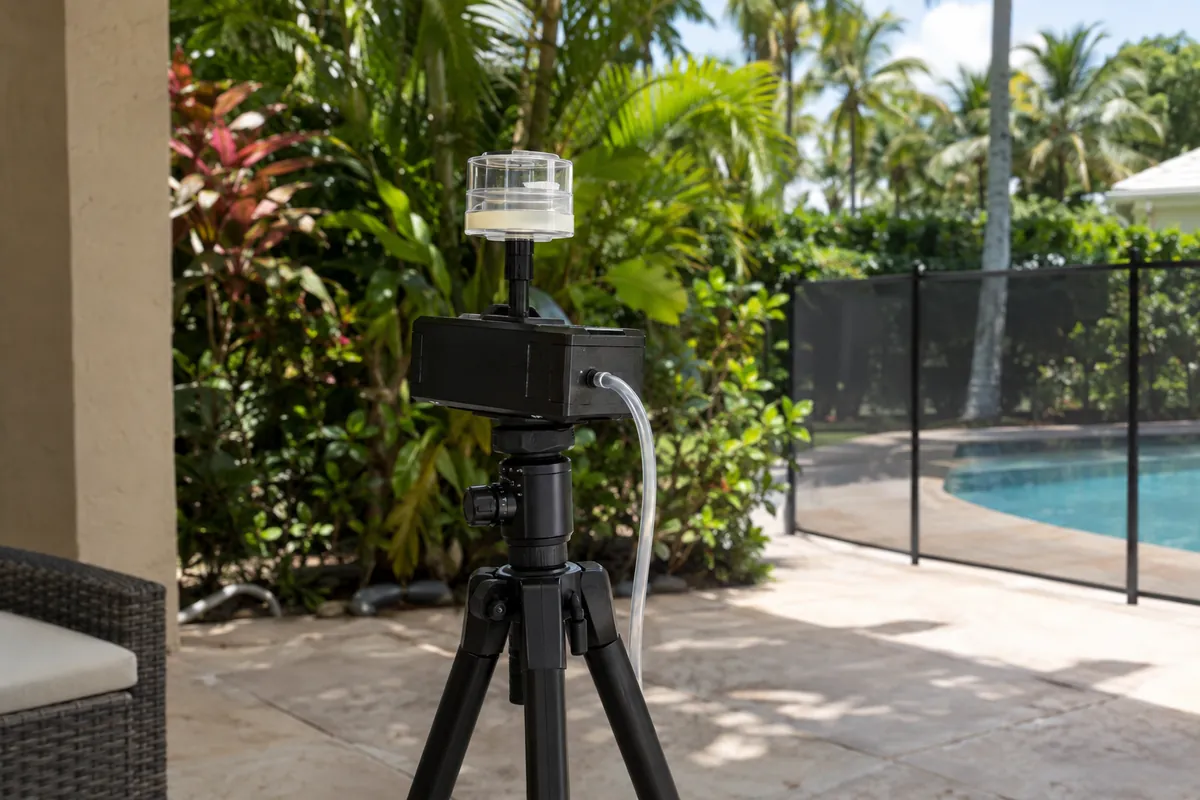
- Air samples (spore-trap cassettes) pull a measured volume of air through a sticky slide. Our pump runs at 15 liters a minute, so a 150-liter sample is a ten-minute run. The lab reports the result in spores per cubic meter of air, written as ct/m³.
- Surface samples (swabs or tape lifts) pick up whatever is sitting on a spot the size of a postage stamp. They come back in spores per square centimeter, ct/cm². A swab tells you what is growing on that surface; it says nothing about the air.
One sample is always taken outside. It is labeled Outside – Control, and it is the most important line in the report.
Indoor air is judged against the outdoor control
There is no legal limit for mold in indoor air, in Florida or anywhere else in the United States. What the industry agrees on (IICRC S520, AIHA) is a comparison: indoor air should look like a thinner version of the outdoor air. Fewer spores, and the same kinds.
So the first thing we do is put the indoor total next to the outdoor total. In South Florida a normal outdoor reading runs from a few hundred to a few thousand ct/m³, mostly Cladosporium and basidiospores (mushroom and wood-decay spores). An indoor room at 100 ct/m³ against 1,500 outside is a clean result.
The second thing we do is compare the mix. If the outdoor sample is mostly Cladosporium and the bedroom is 90% Aspergillus/Penicillium, something indoors is producing those spores, even when the total is low. That pattern, a low total with the wrong profile, is the most common finding we see in homes with A/C problems.
The species that change the conversation
Most of the names on the report are ordinary outdoor molds that drift in through doors and windows. A few are different. They only grow on materials that have stayed wet, so finding them indoors is evidence of a water problem, not just dust:
- Stachybotrys (the one people call black mold)
- Chaetomium, common on wet drywall paper and cabinet plywood
- Memnoniella, Ulocladium and Fusarium
Even a handful of these spores in an air sample is worth a physical look at the suspect area, usually with a moisture meter and a swab. Their spores are heavy and sticky, so they do not travel far; an air sample can miss a colony that a swab finds immediately.
Two other rows matter. Hyphal fragments are pieces of the mold body itself, and indoors they mean something is actively growing nearby. Debris rating (1 to 5) tells you how dusty the slide was; at 4 or 5 the lab may have had trouble seeing everything, and we say so in the interpretation.
Condition 1, 2 and 3
Our conclusions use the three conditions defined in the IICRC S520 standard, because they map directly to what should happen next:
- Condition 1, normal fungal ecology. The indoor air matches outdoors. Nothing to remediate.
- Condition 2, settled spores. No growth where you are, but spores from a Condition 3 area have settled on surfaces. Cleaning (HEPA vacuuming, damp wiping) is indicated.
- Condition 3, actual growth. A surface sample confirms colonization, or the air shows amplification. Remediation of that area is indicated, and the moisture source has to be fixed first or it comes back.
A report can carry more than one condition. A kitchen sink cabinet at Condition 3 with the rest of the house at Condition 1 is a normal result, and it means a small, contained job rather than a whole-house one.
What our reports add on top of the lab data
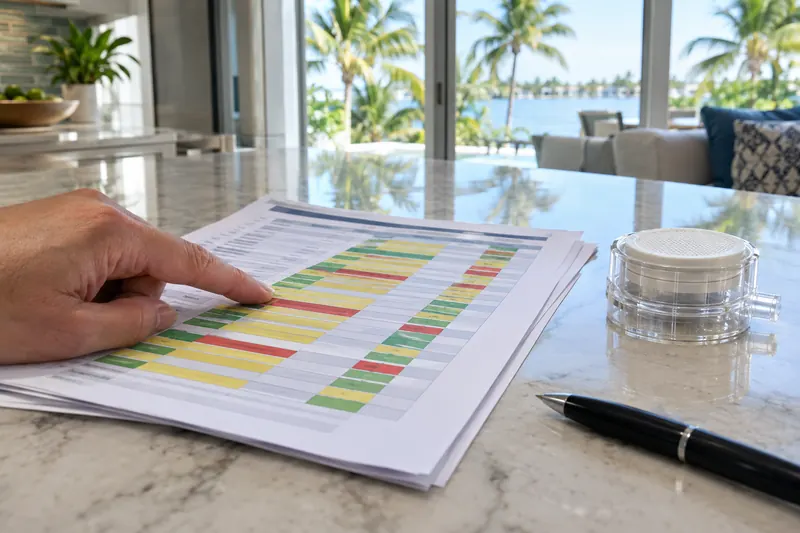
The laboratory (we use Sporelytics in Fort Lauderdale, an A2LA-accredited lab) reports counts. It does not say what they mean for your house. Our report sits on top of theirs and does four things: a one-sentence verdict with the key numbers, a color-coded results table (green through red, judged cell by cell), an interpretation of each sample, and recommendations with an actual scope: what to remove, roughly how much, and what to fix so it stays dry. The full lab report is attached at the end so nothing is hidden.
Questions to ask about any mold report
- Was there an outdoor control, taken the same day?
- Is the lab accredited (A2LA, ISO/IEC 17025)?
- Does the report compare the indoor profile to outdoors, or only the totals?
- If remediation is recommended, is the scope specific, and is the moisture source named?
- Is the person recommending remediation the same person who would do it? In Florida, by law, they cannot be.
If you have a report from another company and want a second opinion, send it over. Reading reports is most of what we do.