Why the A/C is the usual suspect
An air handler pulls warm, humid room air across a coil that is close to freezing. Water condenses on the coil and drips into a pan and out a drain line. That is the whole point of air conditioning: it dehumidifies as it cools. It also means the inside of the unit is wet every hour it runs, and down here it runs almost all year.
Add the dust that gets past the filter, and the return side of the system has everything mold needs: moisture, food, darkness and a steady temperature. Once something is growing on the coil, the pan or the return plenum, the blower pushes its spores through every supply register in the house.
Five signs worth taking seriously
- A musty smell for the first minute after the system kicks on. The smell fades as the air moves, so people stop noticing it. Guests notice.
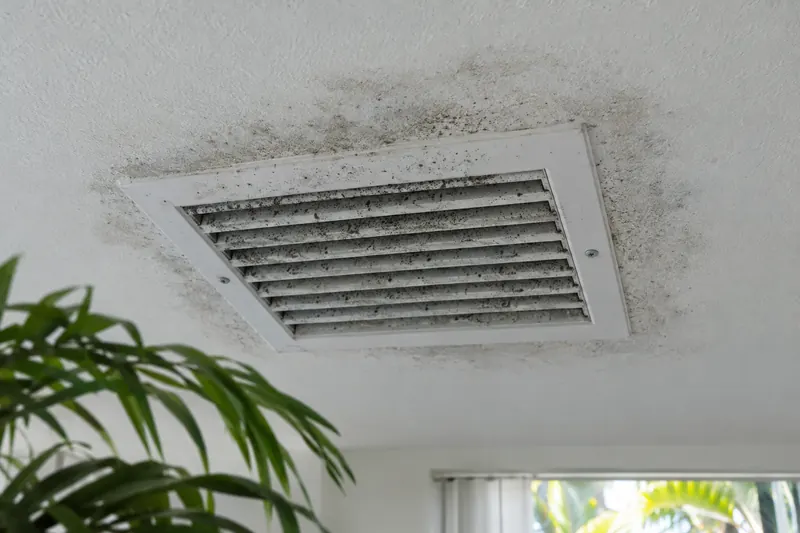
- Black or gray speckling on supply registers, or on the ceiling right around them. Condensation forms on the cold metal, dust sticks, mold grows on the dust. Often the growth is on the vent, not in the ducts.
- Allergy symptoms that improve when you leave the house and come back within a day of returning. A building diagnostic is not a medical opinion, but this pattern is the most common reason people call us.
- Water or rust stains around the air handler closet, a drain line that has backed up, or a float switch that has tripped. Each one means the pan has overflowed at some point.
- A unit that is too big for the house. It cools fast, shuts off, and never runs long enough to pull the humidity down. Indoor humidity sits above 60%, which is the number industry guidance tells you to stay under.
What an inspection does about it
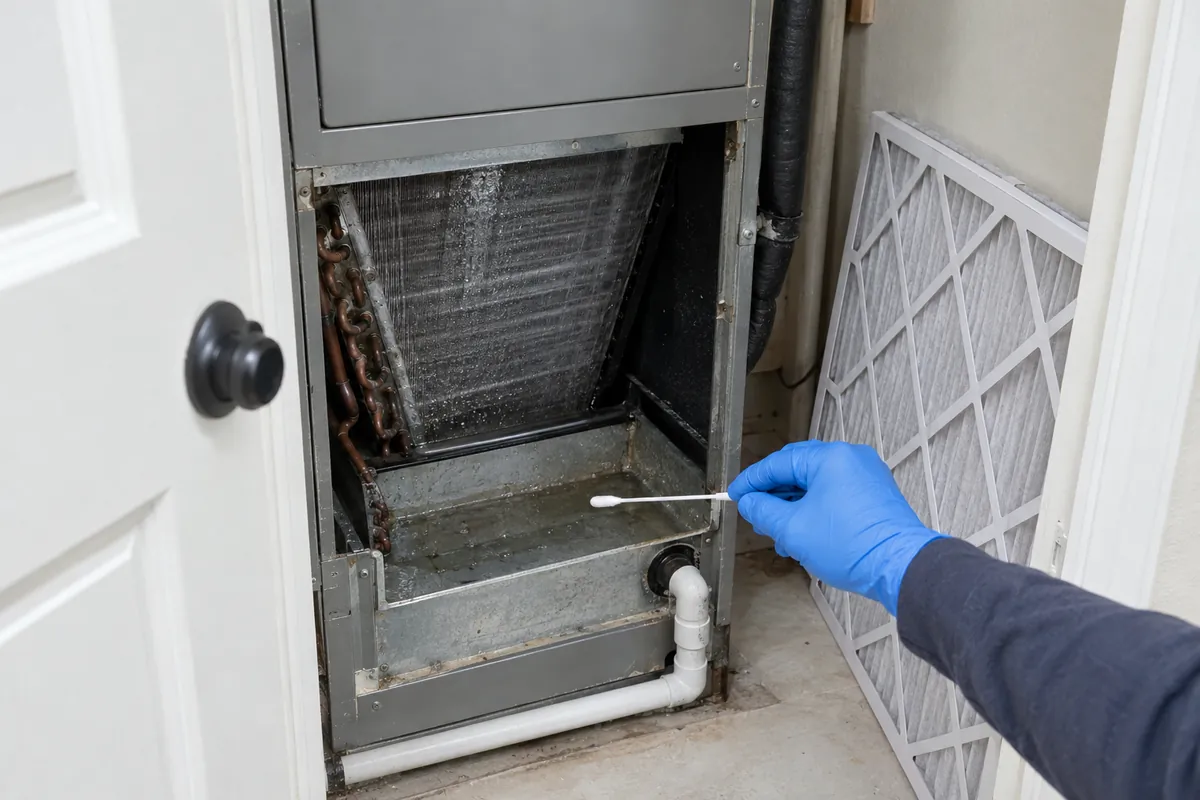
We do not guess at the A/C. We sample it. A swab of the supply register and the return grille, and sometimes the coil or plenum, comes back from the lab as a count per square centimeter and a species. An air sample in the living space, compared against an outdoor control taken the same day, shows whether what is growing in the unit is reaching the rooms.
The result tells you how big the problem is. Growth on the registers with clean air is a localized job: clean or replace the registers, service the coil and pan, change the filter. Growth on the return side with the same species dominating the indoor air means the system is seeding the house, and the return plenum, coil, blower and pan all need cleaning, followed by a few days of HEPA air scrubbing and a re-test.
What it almost never means is tearing out drywall. The mold is in the equipment, and the equipment can be cleaned.
Keeping it from coming back
- A pleated filter rated MERV 8 to 11, changed every one to three months. Cheap fiberglass filters let the dust through that mold grows on.
- The condensate drain line flushed at every service. A clogged line is the most common cause of a wet closet.
- Indoor humidity under 60%. A $15 hygrometer tells you. If the A/C alone cannot hold it, a dehumidifier or a properly sized unit will.
- The fan set to auto, not on. With the fan running continuously, water on the coil evaporates back into the house between cooling cycles.
- Duct cleaning only if a sample shows the ducts themselves are colonized. Most of the time they are not, and the money is better spent on the coil and the return.
If the smell is there, the test is simple and the answer is usually cheap to fix. Call 561-303-0130 or send a request and we will sample the system the same day.