
Mold does not need a leak
Mold needs moisture, and moisture does not have to arrive as liquid. When the air in a room holds enough water vapor, porous materials (drywall paper, wood, fabric, the dust on top of a closet shelf) absorb it until they are damp enough to support growth. No pipe broke. No roof failed. The house just sat too humid for too long.
The line that industry guidance draws is 60% relative humidity. Keep indoor air below it and surface growth from humidity alone is unlikely; above it for weeks, and growth is a matter of time. The comfortable target most references give is 30 to 50%, and in practice we see 45 to 55% in South Florida homes that have it under control.
Why our houses cross the line
- The outdoor air. Dew points of 75°F are a normal summer day here. Every time a door opens, saturated air comes in.
- Oversized air conditioners. A unit that cools the house in ten minutes shuts off before it has removed much water. The thermostat is satisfied; the humidity is not.
- Running the fan on on. Between cooling cycles the blower pushes air over a wet coil and re-evaporates the water it just removed.
- Snowbird and vacant homes. A thermostat set to 80°F to save money barely runs the A/C. We see more humidity mold in seasonal homes than in occupied ones.
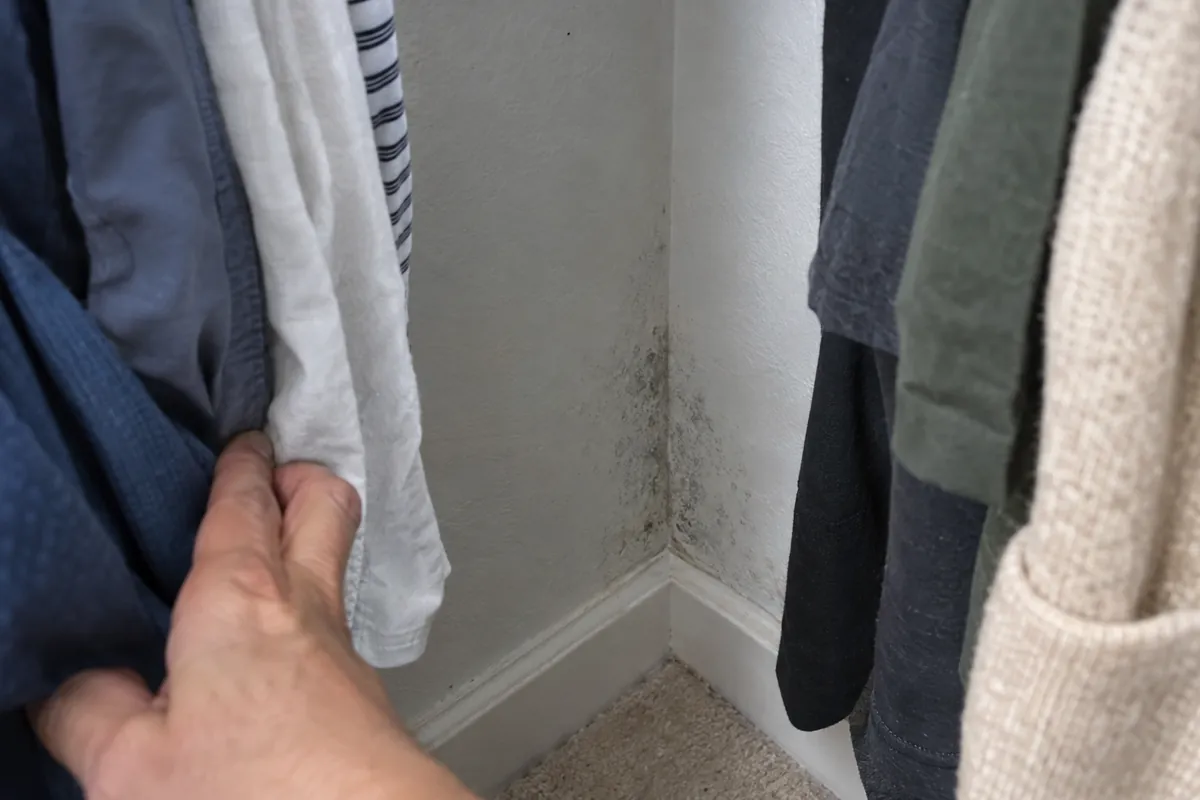
- Closets on exterior walls, and behind furniture. Still air against a wall that is warmer or cooler than the room. Humidity condenses there first. Shoes and leather goods are the early warning.
Measure it
A digital hygrometer costs about $15 and is the best mold prevention money a South Florida homeowner can spend. Put one in the main living area and one in the room that worries you (usually a closet or a bedroom on the sunny side). Watch it for a week, including overnight and the hours the house is empty.
On inspections we take the reading in every room with a calibrated meter, and we note the surface temperature of exterior walls with a thermal camera. A wall that is cooler than the room's dew point will sweat, whatever the hygrometer says.
Fixes, cheapest first
- Fan to auto. Free.
- Thermostat no higher than 77°F when the house is empty; a smart thermostat with a humidity setting if you have one.
- Bathroom and kitchen exhaust fans actually used, and vented outside rather than into the attic.
- A portable dehumidifier for the problem room, drained to a sink or with a pump. Fifty pints a day is the useful size.
- A whole-house dehumidifier tied into the air handler, for houses that cannot hold 55% any other way.
- If the A/C is oversized or short-cycling, an HVAC contractor can slow the blower or, at replacement time, size the new unit for humidity rather than square footage.
When humidity has already become mold
Surface growth from humidity usually shows up as a fine gray or white bloom on the back of furniture, on shoes and belts in a closet, on the ceiling in a corner. It can be cleaned off hard surfaces. Where it has reached drywall or wood, or where it keeps coming back, an inspection with air and surface samples tells you whether it is a cleaning job or a remediation job, and whether the air in the rest of the house has picked it up. The humidity fix comes either way; without it, the cleanup is temporary.
Not sure which it is? Send a request with a photo and the hygrometer reading, and we will tell you before we book anything.