
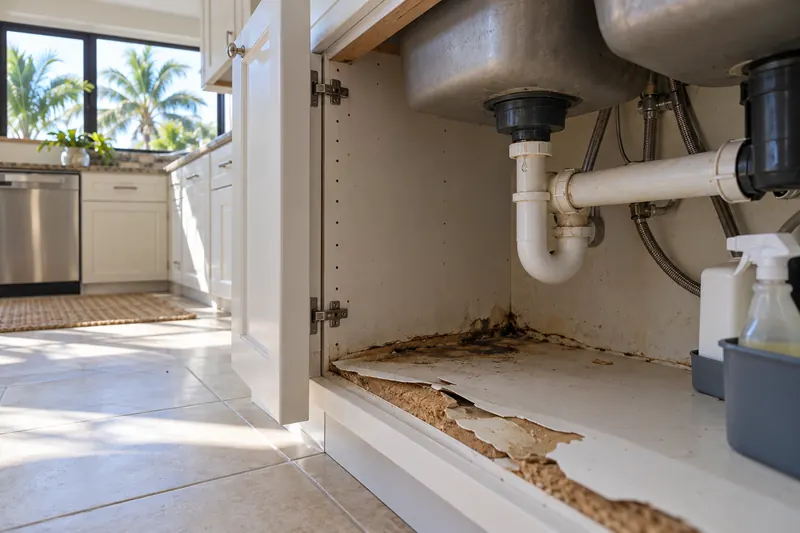
A slow drip can stay inside the cabinet
Open the sink cabinet and move the cleaning supplies. Look behind the bottles, around the drain opening, and along the back corners. A raised seam or peeling finish may tell you more than the dry tile outside the doors.
We often see particleboard cabinet floors that have absorbed repeated drips. The leak may come from a drain connection, a supply valve, the faucet base, or a pullout hose. Water follows the plumbing down, reaches an unfinished edge, and soaks into the board instead of running onto the kitchen floor.
This can continue for months without an obvious puddle. Stored items hide the stain, and a cabinet liner can conceal the swelling. A dry-looking surface does not establish that the underside or back edge is dry.
Do not wait for water to escape onto the floor. An unfamiliar musty odor, a lifted cabinet surface, or damp packaging is reason to empty the space and investigate.
Why particleboard does not bounce back
Particleboard is made from wood particles held together with resin. Its finished face may tolerate an occasional splash, but exposed edges and plumbing cutouts absorb water readily. Once moisture gets beneath the finish, it can be difficult to see where it has traveled.
The board swells as it takes up water. Edges become thick and crumbly, the surface covering separates, and the cabinet floor may sag. Drying can remove moisture, but it does not restore the original shape or strength of deteriorated material.
During an inspection, we look beyond the visible stain. We check accessible cabinet sides, the back panel, adjacent materials, and the toe-kick area. Moisture measurements help us investigate whether dampness extends beyond the apparent damage; they do not identify mold.
A sound, accessible surface and a swollen, delaminated cabinet floor are different problems. The decision to clean or remove material depends on its condition, the extent of growth, and whether affected surfaces can actually be reached.
Where Chaetomium fits into the finding
Chaetomium is a mold genus associated with water-damaged, cellulose-containing materials. That makes persistently wet particleboard a suitable place for it to grow. It is a common finding worth considering in an assessment of a cabinet with prolonged water damage, but it is not the only possible mold.
We cannot identify it by looking at a dark patch. Color, texture, and odor are not reliable species identification. If identification is useful to the assessment, an appropriate sample and laboratory analysis can help establish what is present.
A laboratory finding does not tell us exactly when a leak started. It also does not replace inspecting the plumbing and damaged materials. The practical questions remain the same: Where is the water coming from, what stayed wet, and what can be properly cleaned and dried?
This is a building diagnostic, not a medical evaluation. For help understanding how observations and laboratory findings fit together, read how to read your mold inspection report.
Why the damaged cabinet often comes out
When a particleboard sink cabinet is swollen, deteriorated, and mold-affected, wiping its finished surface usually does not address the whole problem. Growth may be on the underside, inside damaged edges, or against the wall behind the cabinet.
Removal is often necessary because the material has lost integrity and affected surfaces are inaccessible. That does not automatically mean replacing every cabinet in the kitchen. The assessment should distinguish the damaged sink base from neighboring cabinets that remain sound and dry.
Covering the damage with a new panel leaves the original material underneath. Painting over it does not resolve hidden moisture or deterioration. Spraying a product onto the visible patch is not a substitute for correcting the leak and addressing affected material.
Before removal, the work area and plumbing need appropriate preparation. Depending on the findings, remediation may involve containment, HEPA air scrubbers, controlled removal, cleaning, and dehumidifiers. Opening the cabinet also allows the wall and floor behind it to be evaluated.
Florida separates assessment from remediation: a licensed assessor cannot remediate a property they assessed. We assess the condition and document the recommended scope; a separate licensed remediator performs the remediation. Our mold remediation information explains that process.
Make the monthly check easy to repeat
Choose a recurring household task as your reminder to inspect under the sink. Empty the cabinet enough to see its floor and plumbing. Use a flashlight rather than reaching blindly behind stored items.
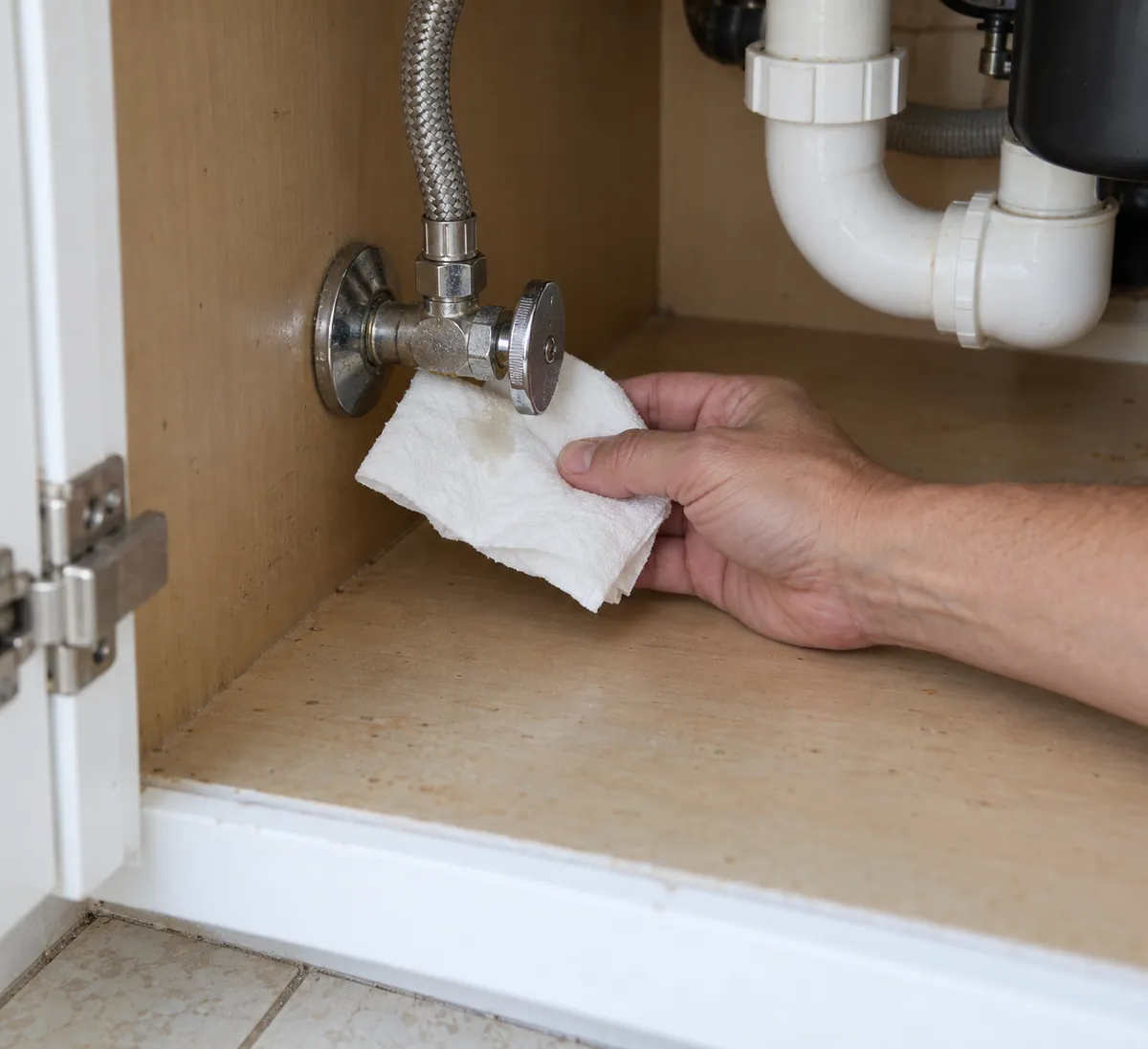
- Look at the connections. Check supply valves, hoses, drain joints, and the underside of the sink for droplets, staining, or corrosion.
- Check during use. With the cabinet open, run the faucet and watch the accessible plumbing. Check again while draining the sink, because some leaks appear only during discharge.
- Inspect the cabinet itself. Look for raised seams, peeling finish, darkened edges, damp corners, or a change in shape.
- Check stored items. Damp cardboard and wet bottle bottoms can reveal moisture that is otherwise easy to overlook.
- Keep the view clear. Store supplies so the back corners and plumbing remain visible. Do not cover existing damage with a liner.
If the cabinet already looks moldy or is crumbling, do not scrape, sand, or pull it apart as part of this check. Photograph what is visible and arrange an assessment.
Stop the leak before replacing the cabinet
For an active leak, stop using the affected fixture and arrange plumbing repair. If you can safely operate its supply shutoff, do so when appropriate. Keep water away from electrical connections and do not reach into wet electrical equipment.
After repair, confirm that the plumbing stays dry during normal use. The affected cabinet and surrounding materials still need evaluation. A repaired fitting does not undo months of absorbed moisture, and a dry cabinet face does not establish that concealed materials are ready to enclose.
Replacement should follow correction of the moisture source and completion of the necessary removal, cleaning, and drying. Keep the new cabinet accessible for the same monthly check.
To assess a swollen or mold-affected sink cabinet, request an inspection or call Palm Beach at 561-303-0130.