
What a king tide does to a ground floor
Every fall, the highest tides of the year push bay and canal water up over seawalls, through storm drains and across low streets in coastal Broward and Palm Beach. Most of it drains back within hours. Homeowners sweep out the garage, hose off the driveway and move on.
The problem is what the water touched while it was there. A ground-floor slab in an older waterfront home often sits only a few inches above the street. Tide water pools against the stucco, soaks the slab edge and finds the bottom of the drywall where it meets the floor. Drywall and its paper facing pull water upward. By the time the street is dry, the wall has already taken a drink.
This is not a storm with rain and wind. There is no roof leak to chase and often no obvious puddle inside. That is why it gets missed.
The salt line that stays after it dries
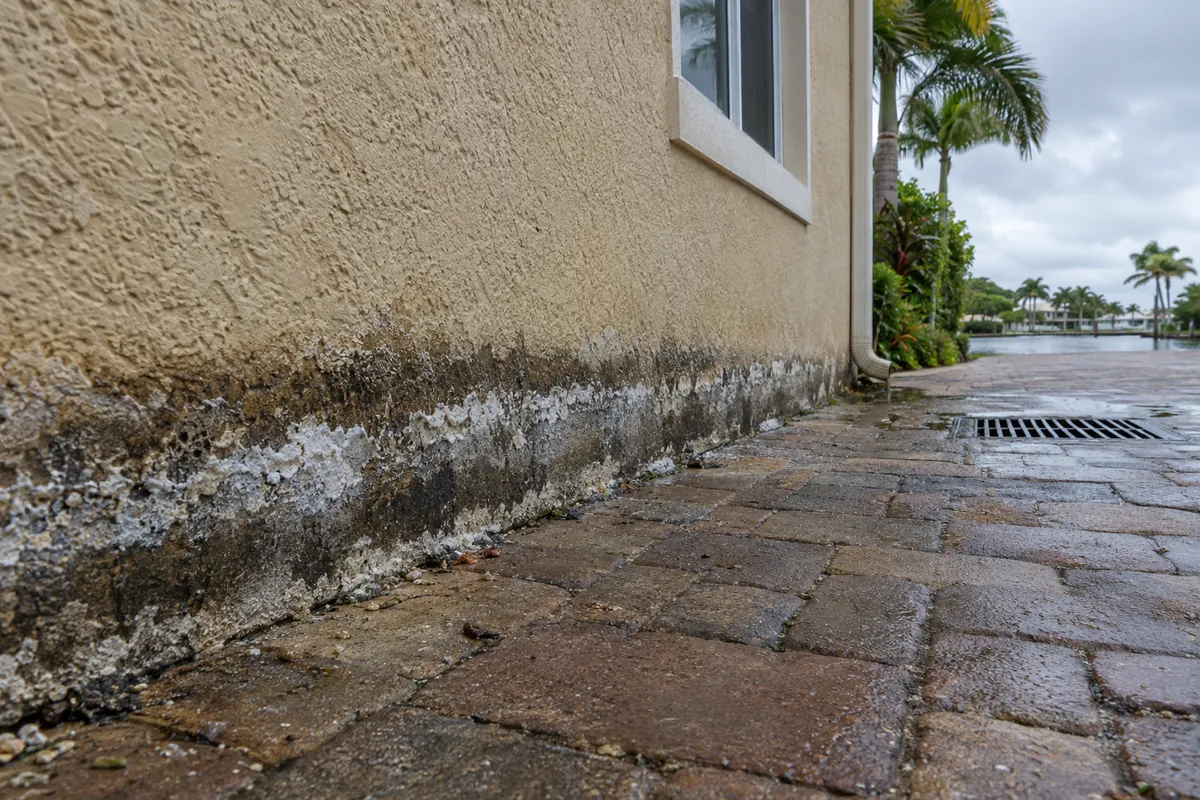
Saltwater behaves differently from a fresh-water leak. When it evaporates, the salt stays behind in the drywall, the baseboard and the slab edge. Weeks later you may see a faint white or tan band a few inches above the floor, a crusty edge where paint has lifted, or baseboards that look swollen even though the room feels dry.
Salt is also hygroscopic. It pulls moisture out of the air on humid days, so a wall that dried out in November can read wet again in a muggy stretch, with no new flooding. The wall keeps re-wetting itself from the inside. That cycle is what gives mold a chance behind the paint, where nobody sees it.
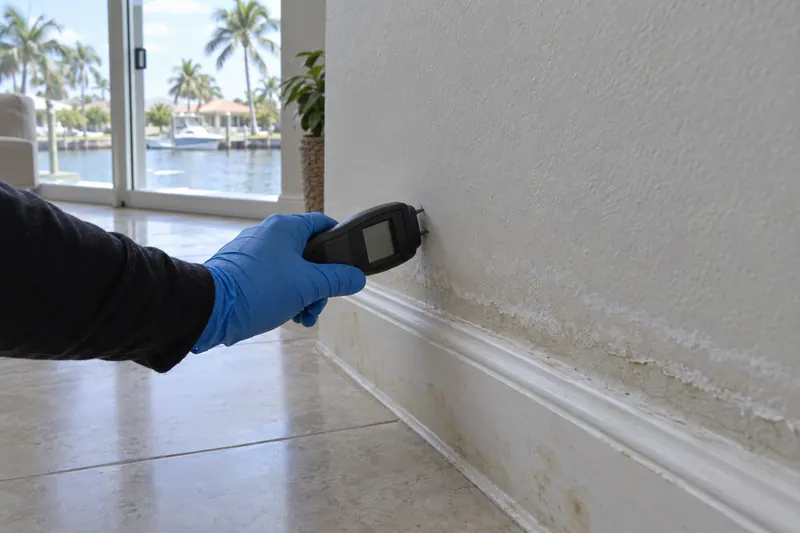
A common finding on these inspections is a ground-floor wall with a visible salt band, a moisture meter reading that rises as the probe moves toward the floor, and a musty smell at the baseboard that the homeowner has blamed on the air conditioning.
Where we look
On a coastal ground floor after a king tide season we work the perimeter walls first, especially any wall that faces the water, the street or a storm drain. We check:
- Baseboards and the bottom of the drywall along exterior walls, with a pin meter and a non-invasive meter, reading at the floor and again higher up to find where the wet band stops.
- Slab-edge stucco outside, looking for a tide line, efflorescence and cracks where water enters.
- Garage and utility walls, which are often lower than the living area and take the water first.
- Closets, behind furniture and under kitchen toe-kicks, where a wet wall sits in still air and dries last.
- Door thresholds and sliding-glass tracks at ground level, where tide water comes in and stays.
If readings are elevated and there is a stain, an odor or a history of tide water, we take air samples. Our pump runs at 15 liters per minute, so a 150 L sample takes ten minutes. We sample the suspect room and an outdoor baseline so the report can compare what is inside against what is already in the air that day. A surface or cavity sample may be added if a wall needs to be opened at one spot to see what is behind it.
A moisture reading alone does not mean mold. It means the material has been wet long enough to deserve a closer look. Mold can start growing on wet drywall within 24 to 48 hours, and king tides come in sets over several days, so a wall that got wet on the first tide may have stayed wet through the last one. The earlier post on the 24 to 48 hour window covers that timeline in more detail.
What remediation looks like on a salt-soaked wall
Drying a tide-soaked wall in place is rarely enough. Even if a dehumidifier brings the surface reading down, the salt remains and will pull moisture back in. Drywall that has wicked saltwater usually comes out.
The standard practice for water-damaged drywall is to cut it out to at least 12 inches above the highest water line, then evaluate what is behind it. On a king-tide job the water line is often the salt band itself, so the cut is measured from there. The remediation contractor sets up containment around the work area, runs HEPA air scrubbers and negative air machines, removes the affected drywall and insulation, cleans the framing and the slab edge, and dries the cavity with dehumidifiers before anything is closed up. Salt residue on the slab and framing is cleaned, not just dried, because leaving it in place sets up the same cycle again.
Under Florida law, a licensed assessor cannot remediate a property they assessed. We write the protocol and verify the work; a separate licensed remediator does the removal. Our remediation page explains how that handoff works and what a post-remediation clearance covers.
What a homeowner can do before the inspection
- Note the date and height of any tide water that reached the house. A photo of the street or the garage on the day helps.
- Do not repaint or caulk over a salt line. It hides the evidence and traps the moisture.
- Pull furniture a few inches off exterior ground-floor walls so air can move and the inspector can reach the baseboard.
- Keep indoor relative humidity under 60% with the air conditioning running. That will not fix the wall, but it slows everything down while you wait.
- If you can see the slab edge outside, look for a white crust or a darker band at the base of the stucco and point it out.
If anyone in the home has health questions, that is a conversation for a physician. Our part is the building: where the water went, what it did to the materials and what has to come out.
Condos, rentals and buyers
In a ground-floor condo, the slab edge and the exterior wall are usually common elements, but the drywall and baseboard inside the unit are often the owner's responsibility. An inspection report that shows the moisture pattern and where it enters helps sort out who repairs what. Landlords with ground-floor units near the water should expect a tenant to report a smell before they report a stain, and should treat the report seriously after tide season.
Buyers looking at a coastal ground floor in fall should ask when the last king tide reached the property and whether any drywall was replaced afterward. A fresh coat of paint along the bottom of an exterior wall is worth a question. The post on signs of hidden mold lists the other things to look for on a walkthrough.
If tide water reached your ground floor this season, or you have found a salt line you cannot explain, request an inspection or call us in Palm Beach at 561-303-0130.