
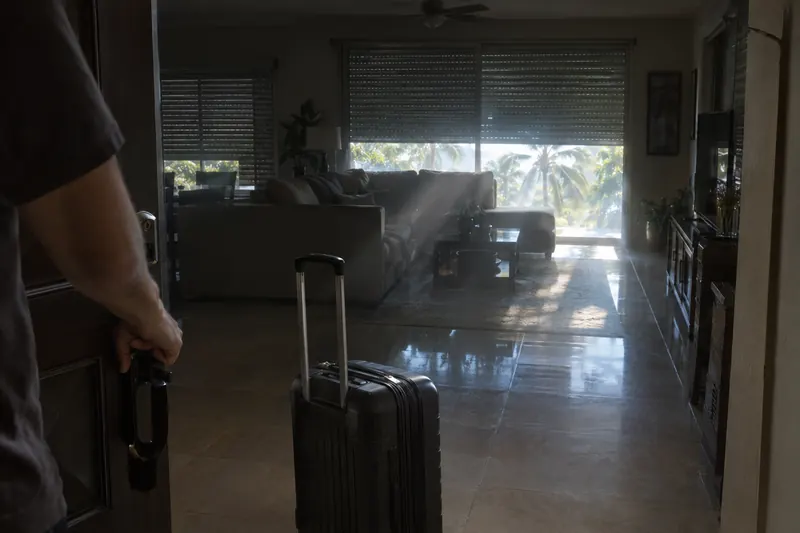
Every October the same thing happens across Palm Beach and Broward. A seasonal owner unlocks the front door after five or six months away, steps into still air, and gets a smell that was not there in April. Sometimes it is faint and musty. Sometimes it is sharp enough that they call us from the driveway.
The smell is a symptom. The problem is what the house did while nobody was watching the humidity. This post covers what to look for in the first hour, what we commonly find in houses that sat all summer, and the settings that keep a closed home dry when you are not in it.
What the thermostat at 80 actually does
Many owners leave the air conditioning set around 80 degrees before they go. The logic is sound: keep the system running a little so the house does not bake, but do not pay to cool an empty building.
The catch is that an air conditioner only removes moisture while it is running. At 80 degrees in a shaded, closed house, the system may run for a few minutes a few times a day. That holds the temperature but does not pull water out of the air. Humidity drifts up and stays up for weeks.
Mold does not need a leak. It needs a surface and sustained moisture. Indoor humidity that stays above 60 percent for long stretches can support growth on drywall, wood, fabric, leather, and the dust that settles on everything. That is the core idea behind the 60 percent rule, and a vacant summer house is where we often see it play out.
Closed interior doors make it worse. Bedrooms, closets, and bathrooms with the door shut get almost no air movement, and they are usually the first rooms where we find growth.
The first hour: what to do before you unpack
Resist the urge to open every window. On a humid October day that can push more moisture into the house, not less. Work through the house in this order instead.
- Set the thermostat to a normal occupied temperature and let the system run. Feel the supply air at a register. Cool, dry air within a few minutes is what you want.
- Open every interior door. Closets, bathrooms, pantry, laundry, the room nobody uses. Let the air mix.
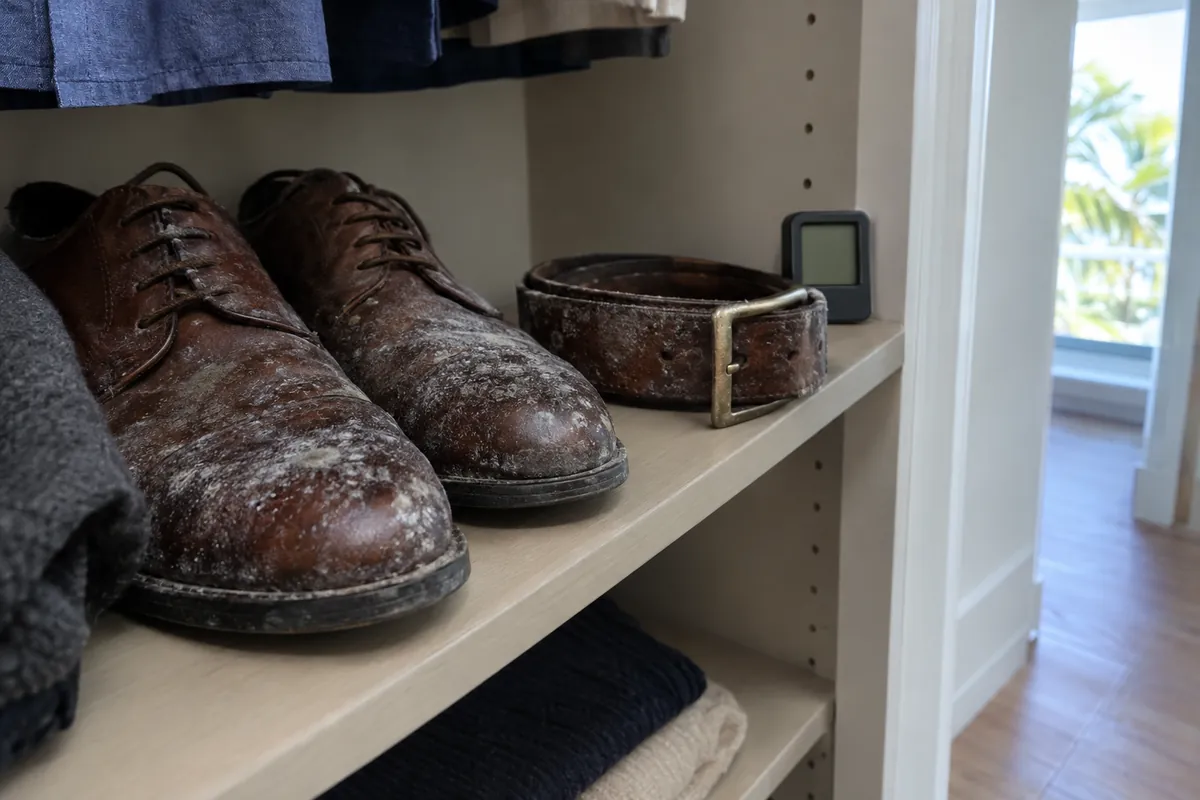
- Walk the house with your nose and a flashlight. Check closet walls, the backs of doors, baseboards, under the bathroom vanity, window sills, and anything leather or upholstered. Fuzzy white or green film on shoes, belts, and furniture is a common finding and a reliable sign the humidity ran high.
- Look at the ceilings. Stains, sagging, or a soft spot can point to a roof issue or a condensate leak from an air handler above. If your air handler is in the attic, read this first.
- Check under every sink and behind the refrigerator and washer. Supply lines and ice maker lines can fail quietly. A slow drip in April is a damaged cabinet by October.
- Check the air handler closet. Look at the drain pan, the float switch, and the surrounding drywall. Rust, standing water, or a stained pan means the condensate drain backed up at some point.
If you can, put a hygrometer in the main living area and one in a closed bedroom. You want both readings below 60 percent within the first day of normal operation. If they are not, the system is not keeping up and something needs attention.
What a house that ran too humid looks like
The pattern in returning-owner homes is familiar.
- Growth on contents before structure. Leather goods, shoes, wood furniture, and the top of a closet rod often show it first. Contents are easy to clean or discard. They are also a warning that the walls behind them saw the same conditions.
- Growth where air did not move. The wall behind a headboard or a dresser pushed against an exterior wall is a frequent spot.
- Supply registers with dark buildup. This can be dust, or growth from condensation on a cold register in a humid room. If the air handler itself has growth, the system can distribute it. We covered the signs in this post.
- A musty smell that does not clear after a day or two of normal cooling. A smell that fades once the house dries out usually came from the air and the contents. A smell that persists usually has a source in a wall, cabinet, or the HVAC system.
A light film on a few items is not an emergency. Widespread growth on walls or ceilings, or any sign of an actual leak, is a different situation and worth a proper look before you start cleaning.
Surface growth on hard, nonporous items can be cleaned with detergent and water. Bag anything you discard. Do not sand, scrub, or pull apart drywall, baseboard, or cabinetry that shows growth. Disturbing it spreads it, and you lose the information an inspection would have given you about how far it goes. Our inspection page explains what that involves, and this page explains how the assessor and remediator roles stay separate under Florida law.
Settings that keep a vacant house dry
Before you leave again next spring, set the house up so the air conditioner removes moisture even when it does not need to cool.
- Lower the setpoint. The mid to upper 70s gives the system enough run time to dehumidify. Exactly where depends on the house and equipment, but 80 is usually too warm for this climate.
- Use a humidity setting if your thermostat has one. Many newer thermostats can run the system on humidity rather than temperature alone. Set it to hold below 60 percent. This is the single most useful change for a seasonal home.
- Consider a whole-house dehumidifier. A dedicated unit tied into the ductwork controls moisture independently of cooling. Ask a licensed HVAC contractor whether it fits your system.
- Leave interior doors open and run ceiling fans on low. Air that moves does not sit and condense.
- Shut off the water at the main. It does not help with humidity, but it turns a failed supply line into a non-event instead of a flooded house.
- Have the condensate drain cleared and the float switch tested before you leave. A backed-up drain in July with no one home is one of the most damaging things that can happen to a seasonal house.
- Arrange for someone to walk the house about once a month. A wireless humidity sensor that alerts you is a good backup, but it does not replace a person looking at ceilings and under sinks.
When to call for an inspection
Not every returning owner needs one. If the house smells slightly stale, the humidity drops below 60 percent within a day, and a walk-through finds nothing on the walls, you are probably fine. Clean the contents, keep the air moving, and watch it for a week.
Call if you find growth on drywall, wood trim, or cabinetry; if there is evidence of a leak you did not know about; if the smell does not clear after several days of normal operation; or if you plan to sell or rent and want documentation of the property's condition. An assessor can tell you where the moisture came from, how far the growth extends, and what a remediator will need to address. If you have never read one of our reports, this walkthrough shows what to expect.
If you are back in town and the house does not feel right, request an inspection or call us in Palm Beach at 561-303-0130. We will tell you what we see and what to do next.